How to Choose a Wooden Pergola
Choosing a wooden pergola? Learn which timber lasts, the right size and placement, and how to keep it looking great for years — plus a free quote.
 František Kečkéš · Updated · 2 min read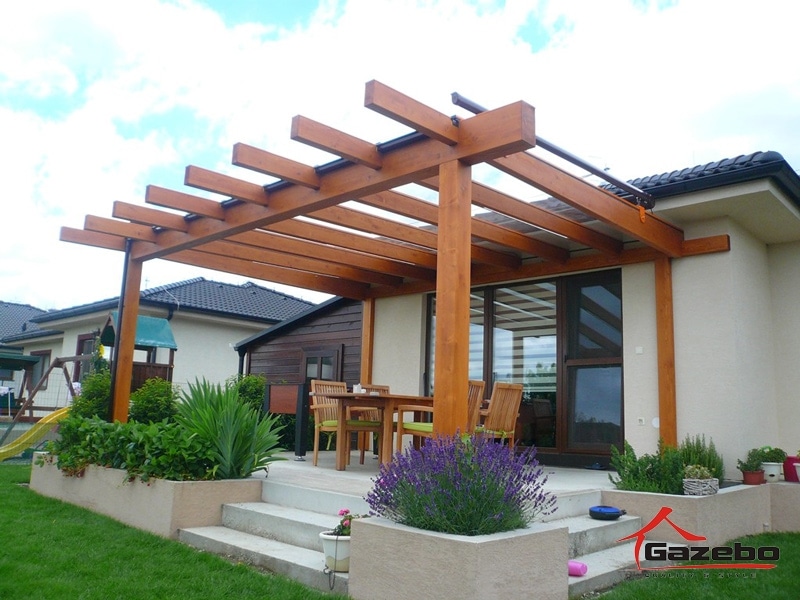
In short: When choosing a wooden pergola, weigh up the type of timber and its properties, the right dimensions and placement in the garden, and how much maintenance it will need. Wood brings a natural feel and is made to measure, but it needs regular protection from the weather. A solid build using screws and exterior-grade materials guarantees a long life.
Choosing a wooden pergola for your outdoor space can add a whole new dimension of beauty and function to your garden. To pick the right model, it is important to weigh up several factors, such as size, material, design and the pergola’s purpose. In this blog post we share useful tips and recommendations to help you decide which wooden pergola will best suit your needs and your garden.
Wooden pergolas are light ornamental structures placed in a garden or a park. Their purpose is to beautify outdoor spaces. A pergola usually has a simple frame construction supported by posts or beams. The word comes from the Latin pergula, referring to a projecting eave. As a type of garden structure it can also serve to extend a building, as shelter for an open terrace, or as a connecting link between pavilions.
People often confuse a pergola with a gazebo. A gazebo is generally thought of as a wooden bench with a roof, usually enclosed by lattice panels that form a framework for climbing plants. A wooden pergola is a much larger, more open structure, and it does not always provide a place to sit. It is made up of posts and beams but has no walls or roof. A garden gazebo is a free-standing structure with a pointed roof and is mostly open.
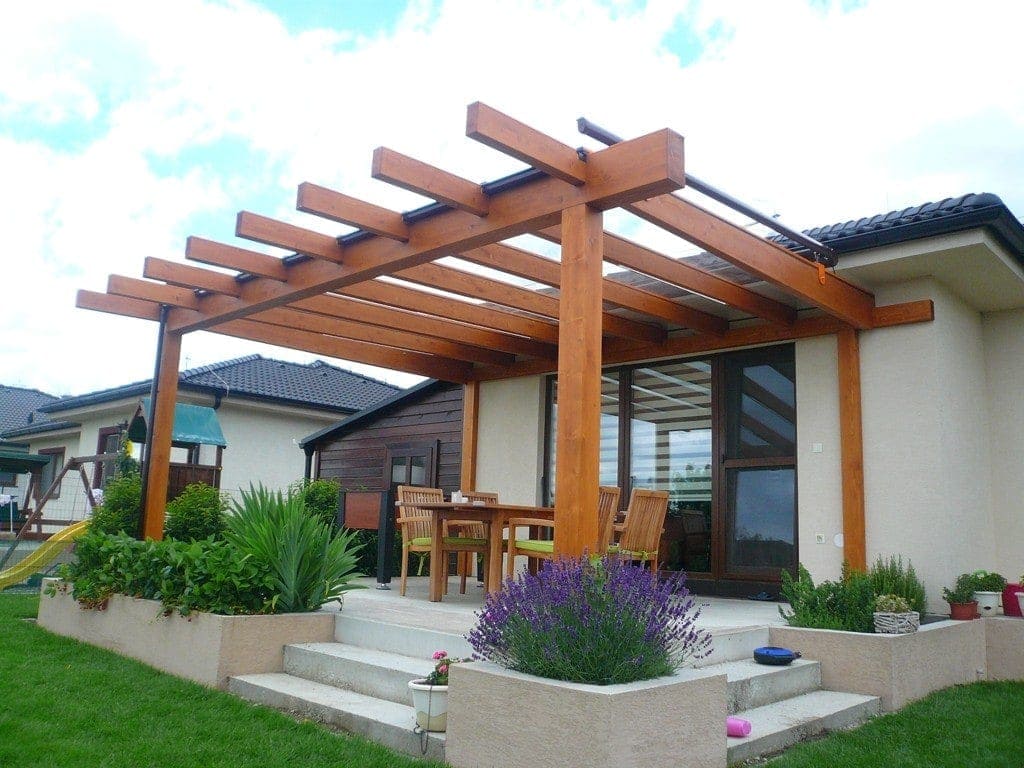
What timber is best for a pergola?
The natural resistance of wood to rot is graded by the EN 350 standard into classes from 1 (most resistant) to 5 (least resistant). Among commonly available species, oak performs best (class 2), larch and pine sit around class 3–4, and spruce is among the least durable (class 4).
Modern wooden pergolas are made from various materials, the most common being solid wood on brick or stone piers. Some designs combine wood with aluminium, vinyl, fibreglass or PVC, particularly in spots where the structure needs to be more moisture-resistant. Each option comes with a different price and level of upkeep, so it is worth comparing several before you decide.
When choosing timber, it is important that it is suitable for outdoor use and properly treated against moisture, insects and rot. The natural look of wood gives every yard a warm, welcoming atmosphere — but that is exactly why it is sensitive to the weather and needs regular protection. If you would like to compare wood with other materials, our overview of the best materials for your pergola will help.
If you are looking for inspiration in garden designs, you are in the right place. Pergolas have many uses — for relaxing, entertaining or outdoor dining — and can make both your home and your garden more pleasant. A wooden pergola is usually designed to shade a path or a relaxation area.
Dimensions and placement
A wooden pergola is essentially made to measure for a specific garden, so it is a good idea to think through exactly what you want in advance. Before you start choosing, consider these points:
- Wherever you decide to place it in your garden, it should harmonise with the style of your home. Take your time over choosing the pergola and its design.
- Arrange any approval or permit before work begins.
- Make sure the building materials are suitable for outdoor use.
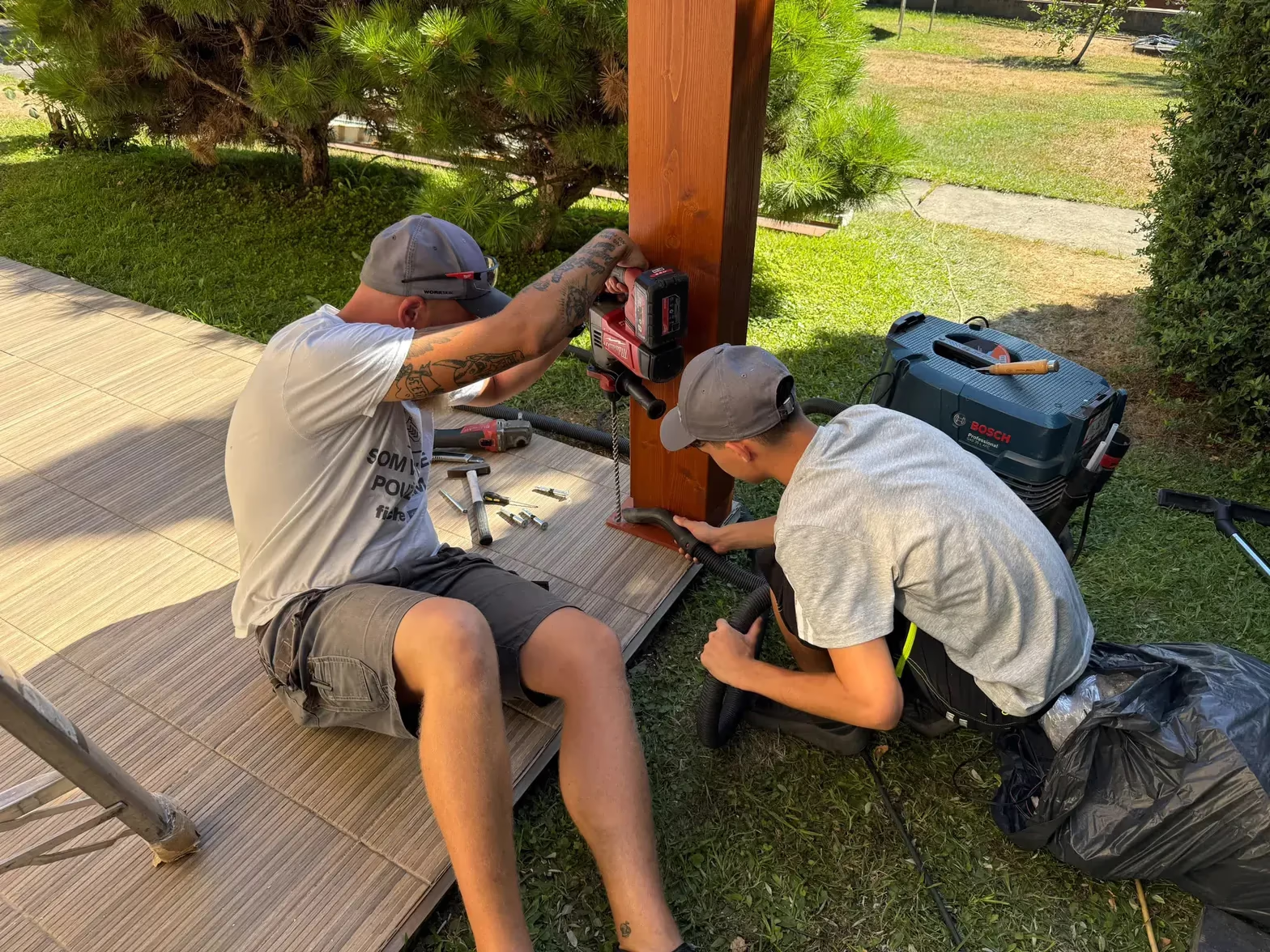
- A wooden pergola has to be built to last. For example, screws should be used instead of nails to ensure the long-term strength and safety of the structure.
- Always ask to see the builder’s credentials and, where possible, some examples of their work.
A wooden pergola is made for beautiful climbing plants to wind around it. If you opt for a flowering pergola, the lattice spacing should be considerably tighter than usual. We can even build a fireplace into the pergola. Ideally this should be a brick-built fireplace, which looks rather better than a modular one assembled from several concrete parts. A practical example of a thoughtful bespoke design is our wooden pergola Milano and its installation.
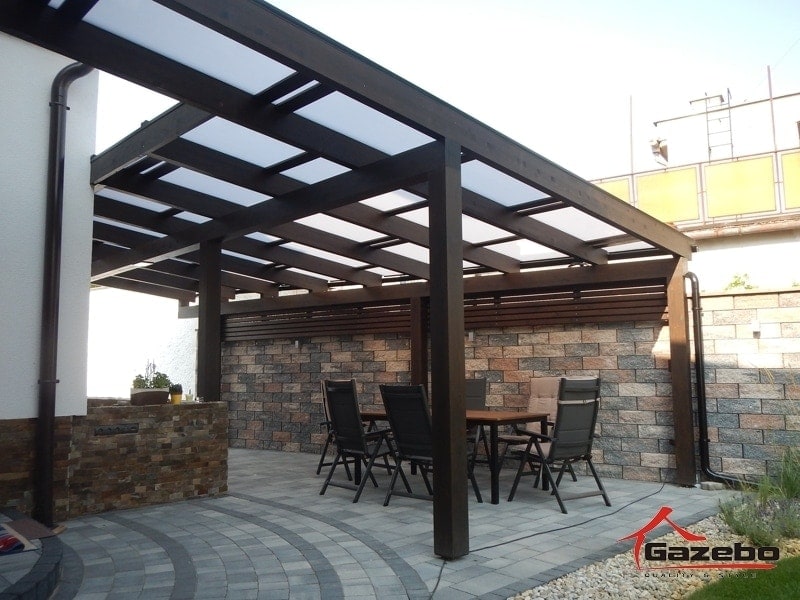
How long does a wooden pergola last?
For your wooden pergola to last as long as possible, it needs regular care. Wood is a natural material that reacts to moisture, sun and temperature swings, so it needs periodic treatment with protective coatings, stains or oils.
The outdoor lifespan of wood can be improved right at the processing stage — vacuum-pressure impregnation forces protective substances deep into the wood under a pressure of 8–10 bar, or the wood can be thermally modified at temperatures above 180 °C, which significantly reduces its water absorption and dimensional movement. Properly treated and well-built wood keeps its strength and good looks for many years.
Lifespan is also affected by the quality of the joints and the fixings used. Corrosion-resistant screws and fasteners, along with exterior-grade timber, are the foundation of a durable structure. If you are not sure whether to go for wood or another material, read which pergola is ideal for your garden.
Either way, designing a garden should be fun and relaxing. Green mazes, paved paths, small ponds, water fountains, colourful flowers and little round trees lining the way around the garden. These are all elements that create a beautiful garden. After all, it is wonderful to have your own green slice of paradise — a retreat where you can enjoy some well-earned time off after a long day at work.
You can see all our products on the products page. Feel free to contact us and we will get back to you that same day.
Frequently asked questions
What timber is best for a wooden pergola?
For a wooden pergola, choose timber intended for outdoor use that is properly treated against moisture, insects and rot. It is important that it is well seasoned and protected with a protective coating. This helps the structure keep its strength and appearance for many years.
How often does a wooden pergola need maintenance?
A wooden pergola needs regular care, because wood reacts to the weather. We recommend periodically renewing the protective coatings, stains or oils so the wood withstands moisture and sun. The exact interval depends on the type of wood, the coating and the climate where you live.
Do I need building permission for a wooden pergola?
In many cases it is a good idea to arrange approval or a permit before work begins. Requirements vary according to the size of the structure and local regulations, so check them in advance. This will save you time and possible complications during the build.
Do you make wooden pergolas to measure?
Yes — a wooden pergola is essentially made to measure for a specific garden. We can design it to match the style of your home and how you use the space. We will happily work with your design or come up with one that meets your needs.
František Kečkéš
Founder of the family firm Gazebo. He has designed custom pergolas, gazebos and winter gardens since 2009 — from the first sketch through production to installation.
Free consultation →