A Bioclimatic Pergola in Winter: How to Use It Year-Round
How to use a bioclimatic pergola in winter: closing louvres, draining water, condensation, side screens, radiant heating and what not to do. A practical guide.
 František Kečkéš · Updated · 7 min read
In short: You use a bioclimatic pergola in winter too. Close the louvres into a continuous roof and tilt them slightly, so water runs off into the integrated channels. Open the louvres briefly to air out condensation. Add side screens to make a sheltered corner. Heat an open structure with radiant (infrared) warmth. Structural snow load and safe snow removal are covered in our separate snow article.
A bioclimatic pergola is not just a summer add-on. The cold months show what you really have. Closed louvres hold rain and snow. The integrated channels carry the water away. With side shading, the terrace becomes a sheltered space you can use while the rest of the garden sleeps. From our installation and service work we know this: the difference between “a summer-only pergola” and a year-round terrace is not the structure. It is how you operate it in winter. This guide is exactly about that.
If you want to understand how the pergola works at all, read the guide what is a bioclimatic pergola first. Here we stay with winter operation. Still weighing up the investment? See why a bioclimatic pergola is worth it.
Can a bioclimatic pergola be used in winter?
Yes. A bioclimatic pergola is an aluminium pergola with tilting roof louvres, built for year-round use. Its heart is those louvres. Open, they let through light and air. Closed, they form a continuous roof that shelters from rain, snow and wind. Frost and damp do not damage aluminium with a quality surface finish. The structure handles winter without special measures.
The difference from summer is in the handling. Keep the louvres mostly closed. Watch the water drainage. Close the space with side screens when needed. In our practice the most common winter mistake is the opposite. The owner “switches off” the pergola in autumn and leaves it standing with open louvres all season. Yet a few habits are enough. You can use the terrace in the cold months too – for a morning coffee, an evening by the sauna, or simply as dry storage for garden furniture.
How do you close the louvres correctly in winter?
Close the louvres into a continuous roof in winter, but do not leave them fully horizontal. A slight tilt is the key. On a tilted louvre, rain and meltwater run off towards the edge and into the integrated drainage channels. They do not pool in the joints. Most of our pergolas solve this tilt in the design. You simply set the louvres to the closed position with the crank or the remote.
With motorised control, check that the louvres close fully. Even a small gap lets driven rain in. In frost, do not turn the louvres up and down needlessly. Frozen moisture between the profiles can resist. Forcing the mechanism is a needless strain. If the louvres freeze, wait until they loosen, or ease them gently free – never with brute force.
Why is water drainage the most important thing in winter?
Water drainage decides whether the pergola serves you in winter or causes trouble. Closed louvres lead rain and meltwater into the channels in the frame. From there the water runs down the columns to the ground. Leaves, needles or autumn debris can block the channels and drainage openings. Then the water has nowhere to go. It builds up and freezes in the cold. The ice gradually blocks further drainage.
So before winter we clean the channels, and we check them through the season – especially after wind and after leaf fall. It is a five-minute job with the biggest impact on a trouble-free winter. When designing the pergola, keep the drainage columns accessible. Then they can be checked without dismantling. Free drainage is also the best prevention against ice on the louvres and in the channels during frost.
Condensation on the louvres: where it comes from and what to do
Condensation forms when warm, damp air meets the cold surface of the louvres – the same effect as a fogged-up window. In winter it is often a little warmer under the pergola, from a radiant heater or from people’s breath at the table. When the louvres are frozen through, moisture condenses on their inner side. It is not a fault. It is physics.
The solution is ventilation. Open the louvres briefly or tilt them into a venting position. The damp air escapes and drier air replaces it. If you use side screens, open them occasionally too. A fully closed space with no air exchange invites condensation. A permanently closed, heated pergola without ventilation is the surest route to fogged louvres and damp furniture. Short, regular airing removes the problem reliably.
How do you turn the pergola into a sheltered winter space?
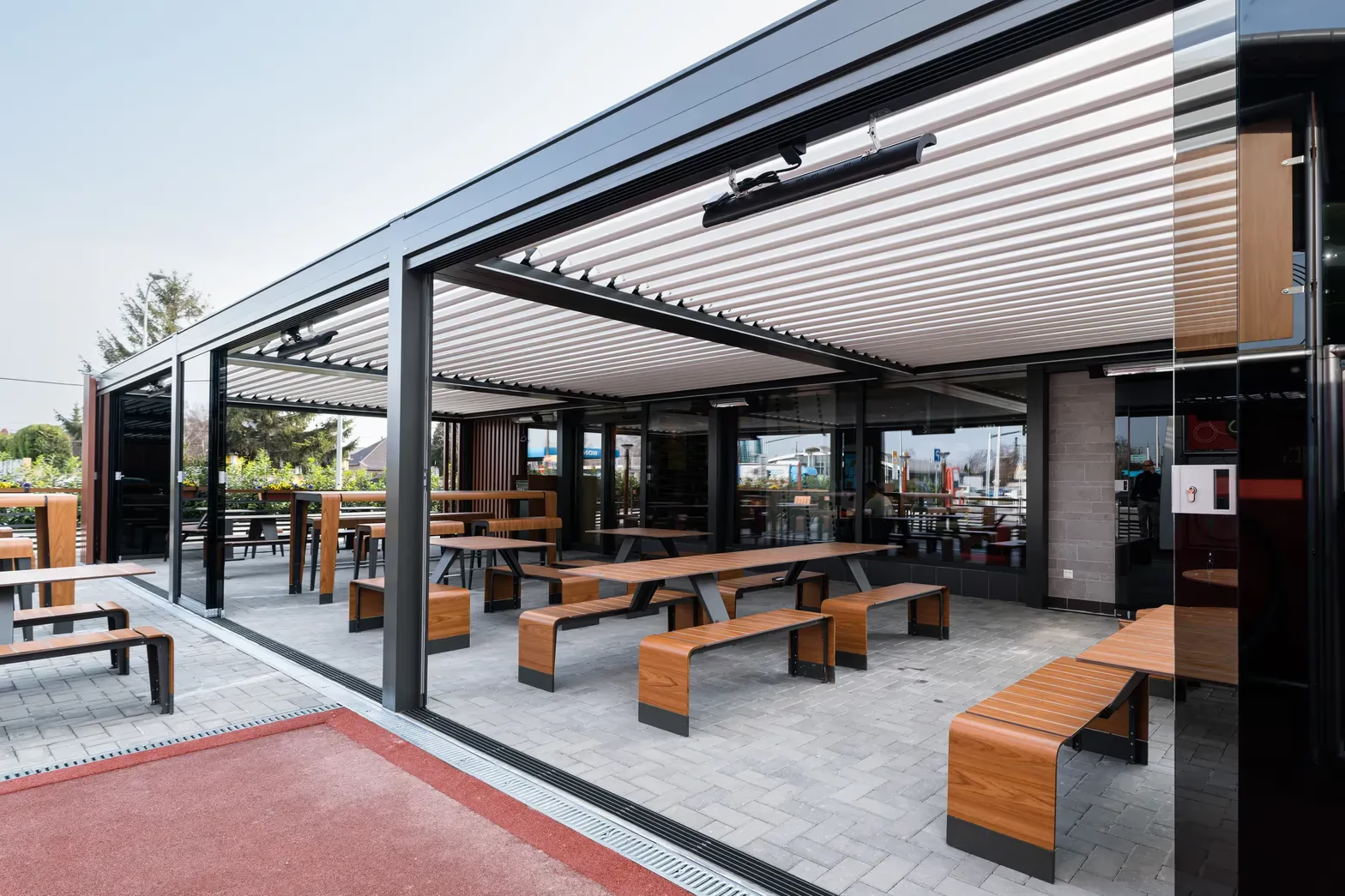
Side screens turn an open pergola into a sheltered corner. They are vertical shading fabrics or clear roller blinds that lower along the sides of the structure. In winter they play a different role than in summer. They do not shade from the sun. They stop side wind and keep heat from blowing away. Close the louvres overhead and lower the screens at the sides. You get a space that protects from wind and rain, where heating makes sense – the warmth does not escape instantly.
The screens do not seal the space like a glazed room. It stays naturally ventilated – an advantage against condensation. If you want a fully enclosed, heated space usable even in hard frost, look at our winter-garden articles instead. They cover the differences between a pergola and glazing. For ordinary winter use of the terrace, screens are the simplest and cheapest solution.
How do you heat an open bioclimatic pergola?
Heat an open pergola with radiant (infrared) warmth, not convection. The reason is simple. A bioclimatic pergola is not an airtight room. Convection heaters warm the air, and warm air escapes at once through the louvres and the sides. You end up heating the surroundings.
Radiant (infrared) heaters work differently. They do not warm the air. They warm the objects and people the beam reaches, much like the sun. That is why they are the practical choice for terrace heating, even in an open space. Position them to face where you sit, ideally from the side or above. With the screens down, their effect is markedly higher – the heat has no chance to fly off.
The exact output and number of heaters depend on the size of the terrace and how often you use it in winter. We are happy to recommend both at the design stage. While the pergola is open, think radiant. Convection does not belong here.
How do you clean the pergola in winter?
Clean an aluminium pergola in winter minimally and gently. Most routine maintenance is done before and after winter. Through the season it is enough to remove anything that could block the water drainage – leaves from the channels, debris from the louvre edges. Do not use sharp scrapers or salt on a frozen layer. Sweep snow from the louvres with a soft broom if needed, or let it melt. Radiant heat and an ordinary thaw will clear it themselves.
Leave full surface maintenance for milder days or the spring season prep – washing with water and a mild detergent, checking the seals and the mechanism. The detailed year-round procedure is in the guide how to care for an aluminium pergola. The principle is simple. In winter, watch and clear the drains rather than scrub the structure.
What should you not do with a bioclimatic pergola in winter?
In winter, avoid five things. First, do not force frozen louvres – wait until they loosen. Second, do not scrape ice and snow off the louvres with metal tools. You will scratch the surface finish. Third, do not spread de-icing salt on the structure or into the channels. It does aluminium and seals no good.
Fourth, do not heat a fully closed space without ventilation – condensation forms. And fifth, do not leave the channels blocked: that is the most common cause of winter trouble.
Snow on the roof is a chapter of its own. We deliberately do not cover load-bearing capacity and safe removal here. They get the space they deserve in the article on pergola, gazebo and snow. Follow these principles and the pergola will see out the winter unharmed.
Your winter checklist
- Louvres — closed into a continuous roof, with a slight tilt so water runs into the channels.
- Drainage — channels and openings clear of leaves; five minutes, the highest-impact job.
- Condensation — air out briefly and regularly; never heat a sealed, unventilated space.
- Side screens — down when you sit outside; they hold the radiant heat in.
- Heating — radiant (infrared), aimed at where you sit; convection heat escapes.
- Never — force frozen louvres, scrape with metal, or spread de-icing salt.
How do you get a bioclimatic pergola ready for year-round use?
If you plan to use the pergola in winter too, tell us at the design stage. We prepare the structure for year-round operation, with side screens and provision for radiant heating. The process is simple and without obligation:
- Contact us via the contact form or by phone. Approximate terrace dimensions, the aspect and a few photographs are enough.
- We design a solution – column layout, louvre orientation, water drainage, side screens and provision for heating.
- You receive a fixed price that holds, with an overview of what year-round use involves. We break down the price list and the factors in the article how much a bioclimatic pergola costs.
Frequently asked questions
Does a bioclimatic pergola survive winter?
Yes. An aluminium structure with a quality surface finish withstands frost, damp and closed louvres without damage. What matters is keeping the drainage channels clear and not forcing frozen louvres. Snow load-bearing capacity is covered in the separate article on pergola and snow. It is scoped to Slovak conditions; rules and climate elsewhere differ.
How does water drain from the pergola in winter?
Tilt the closed louvres slightly. Rain and meltwater run off into the integrated channels in the frame, then down the columns to the ground. The condition is clear channels and drainage openings, free of leaves and debris. So we clean them before winter and check them through the season.
Why is condensation forming on my louvres?
Warmer, damp air under the pergola meets the cold louvres – just as a window fogs up. It is not a fault. You solve it with brief ventilation. Open the louvres or screens for a moment so the damp air escapes. A permanently closed, heated space with no ventilation invites condensation.
What is the best way to heat an open pergola?
Radiant (infrared) warmth. An open pergola is not airtight, so convection heat escapes with the air. Infrared heaters warm people and objects directly, much like the sun. They work even in an open space. With the side screens down, their effect is higher still.
Do I have to remove snow from the pergola in winter?
We deliberately do not cover snow load-bearing capacity and safe removal in this article. They are covered in the separate article on pergola, gazebo and snow – how much snow the structure holds, and how to remove it without damaging the louvres. The figures there apply to Slovak conditions; snow loads elsewhere differ.
František Kečkéš
Founder of the family firm Gazebo. He has designed custom pergolas, gazebos and winter gardens since 2009 — from the first sketch through production to installation.
Free consultation →