How to Care for an Aluminium Pergola
An aluminium pergola is almost maintenance-free: soapy water and a soft cloth do it. The 20 μm anodised layer protects the surface. What to avoid, and snow.
 František Kečkéš · Updated · 6 min read
In short: An aluminium pergola is almost maintenance-free — aluminium doesn’t rot, doesn’t corrode and never needs painting. For routine cleaning, a mild soapy solution (washing-up liquid) and a soft brush or cloth are all you need; save a special aluminium cleaner for the more stubborn marks. Never use wire brushes or sharp objects. In winter, carefully clear any build-up of snow from the roof.
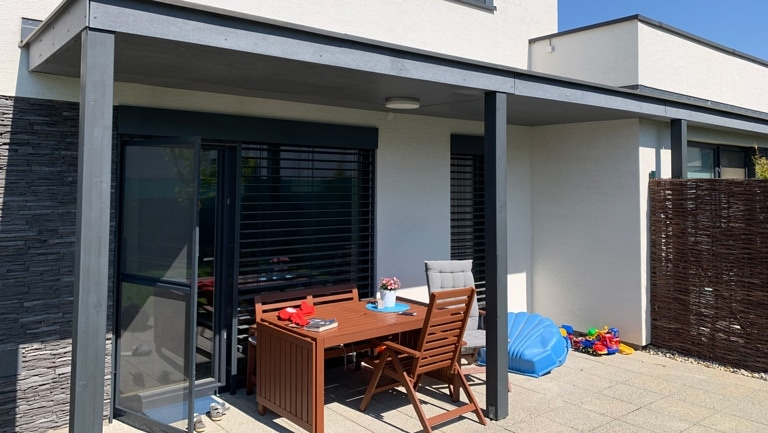
This is our canonical guide to caring for an aluminium pergola: you’ll find out how often to clean it, what to clean it with, what to avoid, and what to check on the roof and floor. Still deciding on a model? Start with our guide to choosing an aluminium pergola. If you own an aluminium pergola or shelter, you’ll appreciate just how little effort it takes to keep it clean and gleaming. For routine cleaning, a mild soapy solution (washing-up liquid) and a soft brush or cloth are all you need.
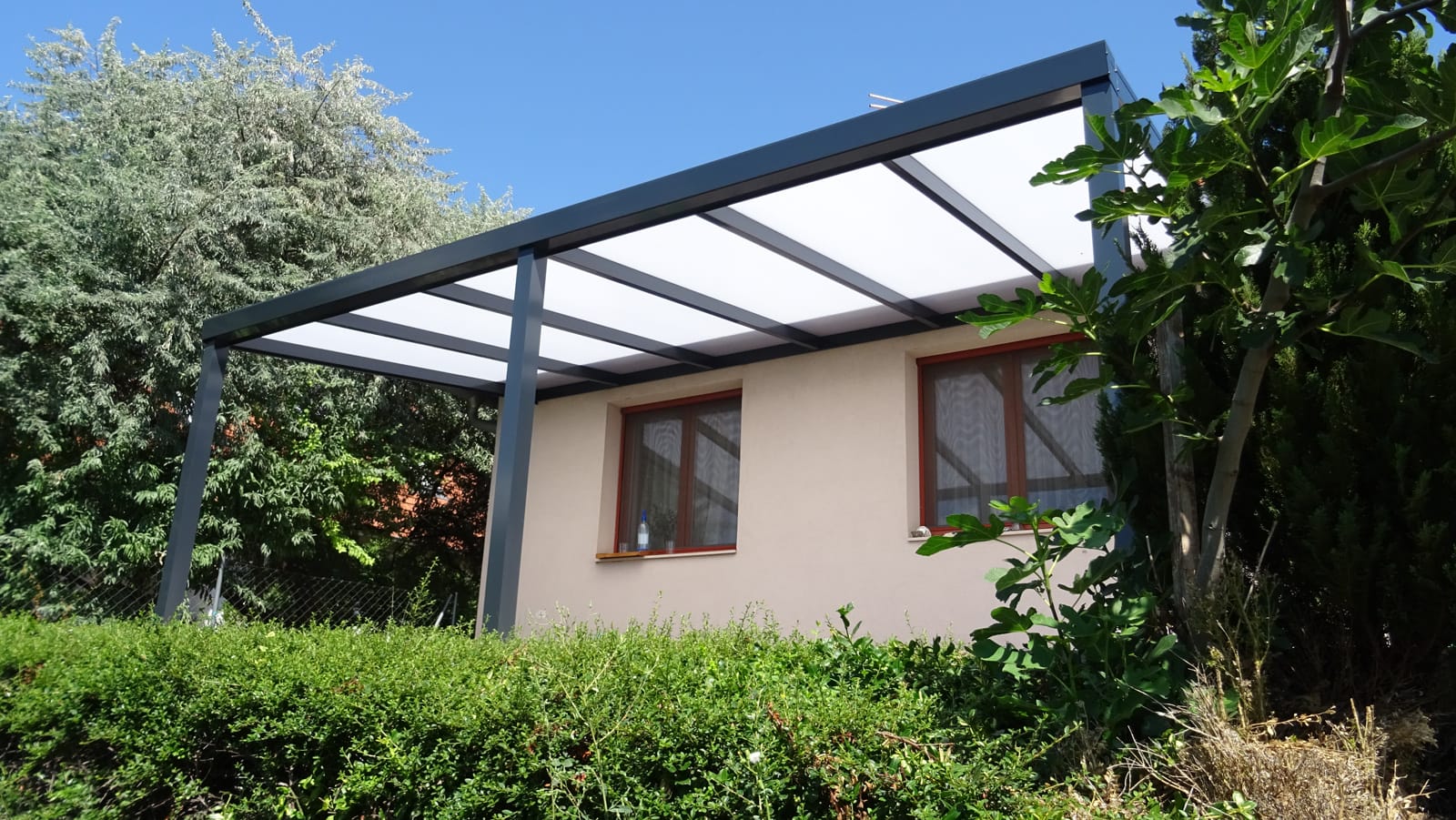
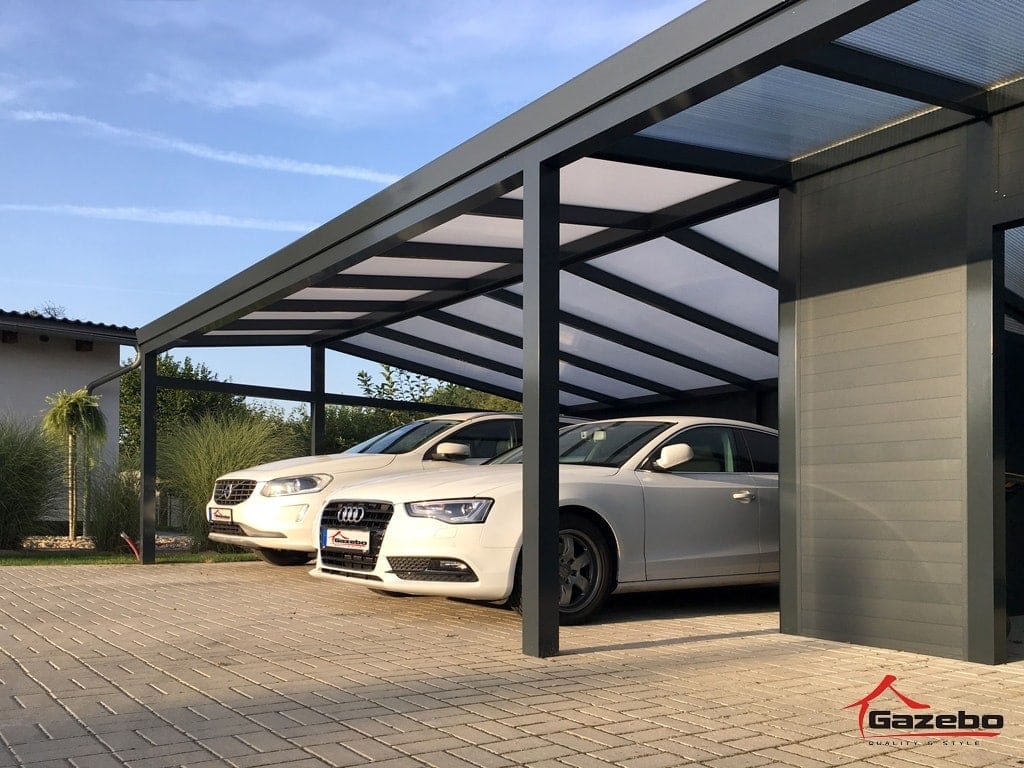
Why doesn’t aluminium need coatings?
The durability of aluminium comes from an anodising surface finish, which forms a hard oxide layer on the profile — and a layer thicker than 20 μm is enough for reliable protection. It’s precisely this layer that means an aluminium pergola never needs painting or varnishing, unlike wooden pergolas, which need regular protection against rot, insects and fungi.
Aluminium doesn’t rot, dry out or become brittle, so care comes down to cleaning and the occasional inspection. Do watch out for chemicals, though: aluminium reacts with certain acids and aggressive fertilisers, so handle these carefully anywhere near the structure.
How often and with what should you clean an aluminium pergola?
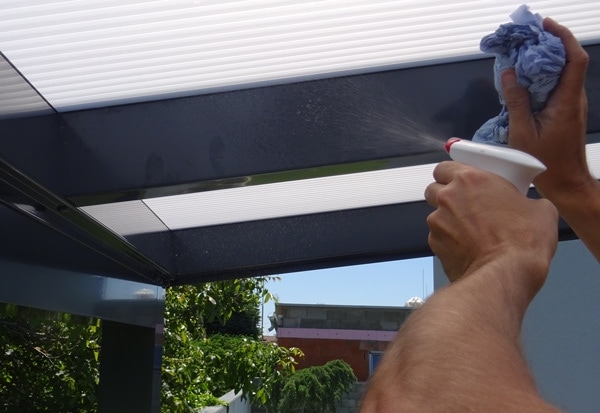
In our experience, a thorough wash once or twice a year is enough — ideally in spring and after the leaves have fallen. Use ordinary washing-up liquid and water, with a soft brush or cloth. There’s no need to paint, varnish or otherwise treat the profiles. Don’t use wire brushes or sharp objects for cleaning, as they will damage the surface layer. Steer clear of pressure washers set to full power, too; the water pressure gets in under the seals and into the wiring of the motorised louvres.
If the colour coating on the pergola does get damaged, get in touch with us — the coating can be restored. If yours has seen better years, our guide on how to revive an older pergola shows what’s possible.
How to remove more stubborn marks
If soapy water alone isn’t enough for certain dirt, reach for a special aluminium cleaner. Before you use it, make sure the surface is completely dry. Apply the cleaner to the aluminium pergola or shelter with a hose or a sponge and leave it to work according to the instructions on the packaging.
Once it has done its job, rinse the surface with clean water. Make sure you’ve removed all the cleaner, and let the surface dry completely. If any moisture is left on the aluminium, it can leave marks or unsightly rings. Small marks or scratches can be removed carefully with fine steel wool or a polishing paste; rinse the surface thoroughly afterwards.
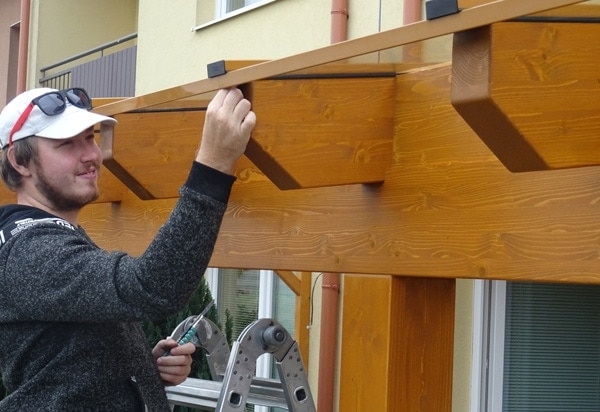
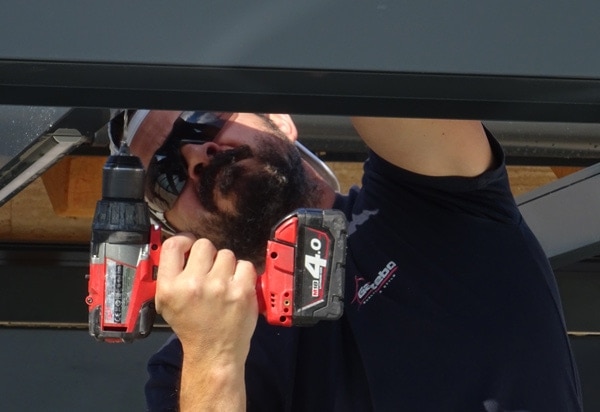
What should you focus on when caring for it?
Caring for an aluminium pergola comes down to three areas:
- The structure — the aluminium profiles: cleaning with washing-up liquid, plus a check of the joints and anchoring.
- The pergola roof: depends on the type of roofing. A shading screen just needs retracting into its box for winter; clear dirt from a glass roof as required.
- The pergola floor: paving and concrete only need sweeping and washing with soapy water. A wooden floor is more demanding — it needs an impregnating coating, oil or wood stain, and sanding down every few years.
Combine the check of the joints, anchoring and water drainage with a pre-season inspection. We’ve described the routine before winter in our article on how to prepare your garden gazebo for winter, which also works for a pergola with similar roofing.
How to care for motorised louvres and drainage channels
The moving parts and the water drainage are the only spots on an aluminium pergola that call for a little attention. Clear leaves and debris from the drainage channels running inside the load-bearing profiles twice a year, ideally during your autumn and spring cleaning; a blocked channel holds water back, which then overflows past the seals.
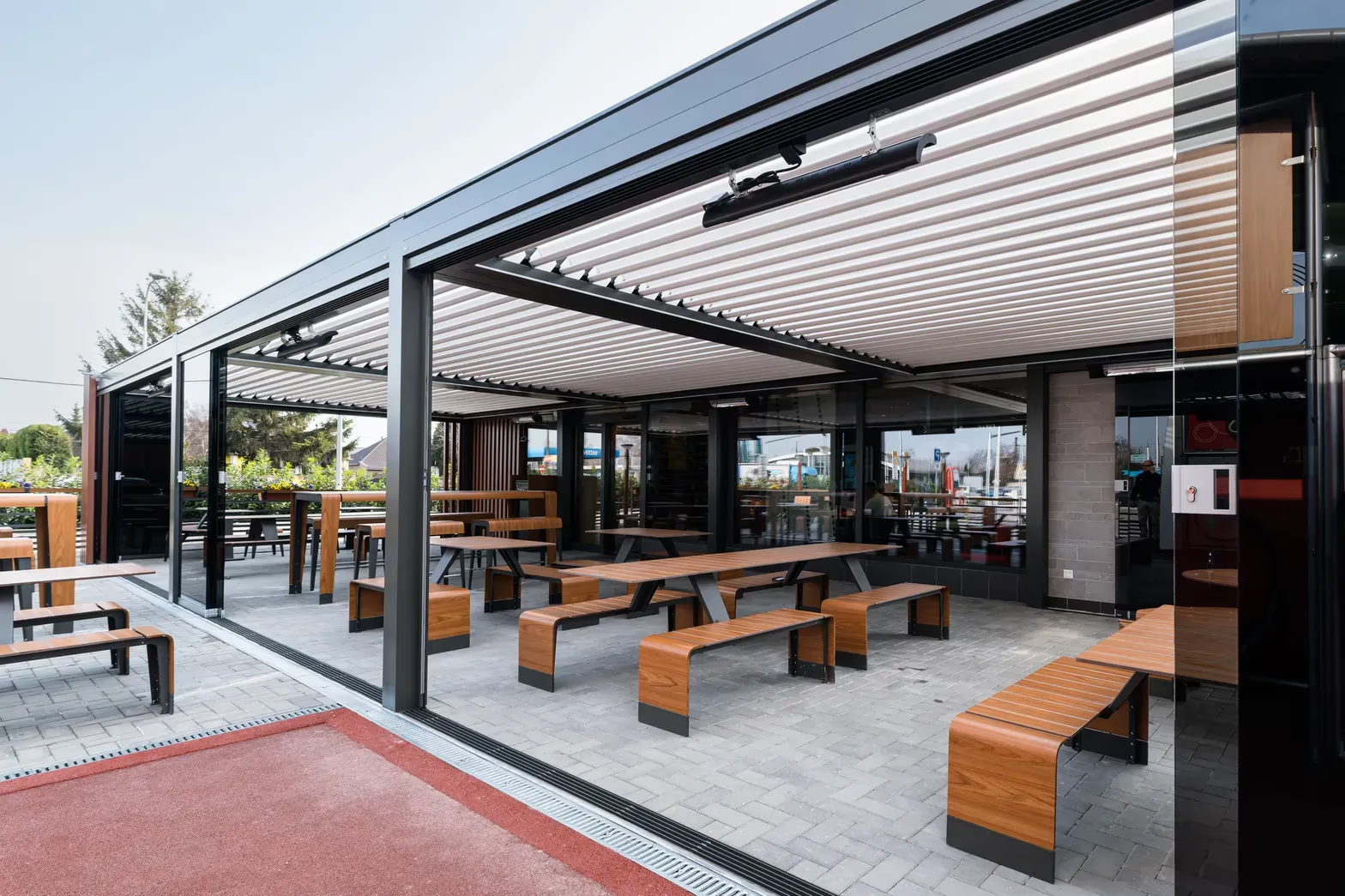
Turn the louvres to the vertical position and wipe them with a cloth and soapy solution, keeping the pins dry. Never spray water directly at the motor or its cover. After winter, run the full louvre travel with no load to test it, and check the batteries in the remote.
Keep planters and fertilisers well away from the profiles. Fertiliser dissolved in water contains salts that leave matte marks on aluminium, and these are harder to remove than ordinary dirt.
Watch out for snow build-up on your aluminium pergola
In winter, during heavy snowfall, we recommend carefully removing any build-up of snow from the pergola roof. Snow has its own dedicated article, covering the load ratings of individual models and the safe procedure: read up on how to care for your pergola in winter. Here just one rule applies: only clear snow with wooden or plastic tools, never metal ones.
Why does aluminium need less care than wood?
Because it doesn’t corrode, doesn’t rot and isn’t prone to wood pests. Aluminium pergolas are also considerably lighter than wooden ones, so they’re easier to install, and aluminium can be shaped into various profiles and finished in any shade. There’s an environmental bonus too: recycling aluminium saves up to 95% of the energy needed to produce new aluminium.
Wood, of course, has its own charm — it feels warmer to the touch and suits some gardens better. It does, however, need regular coatings and is more prone to damage from moisture. For how to care for the other materials in garden seating areas, see our guide to maintaining pergolas and gazebos.
Quality installation is the foundation
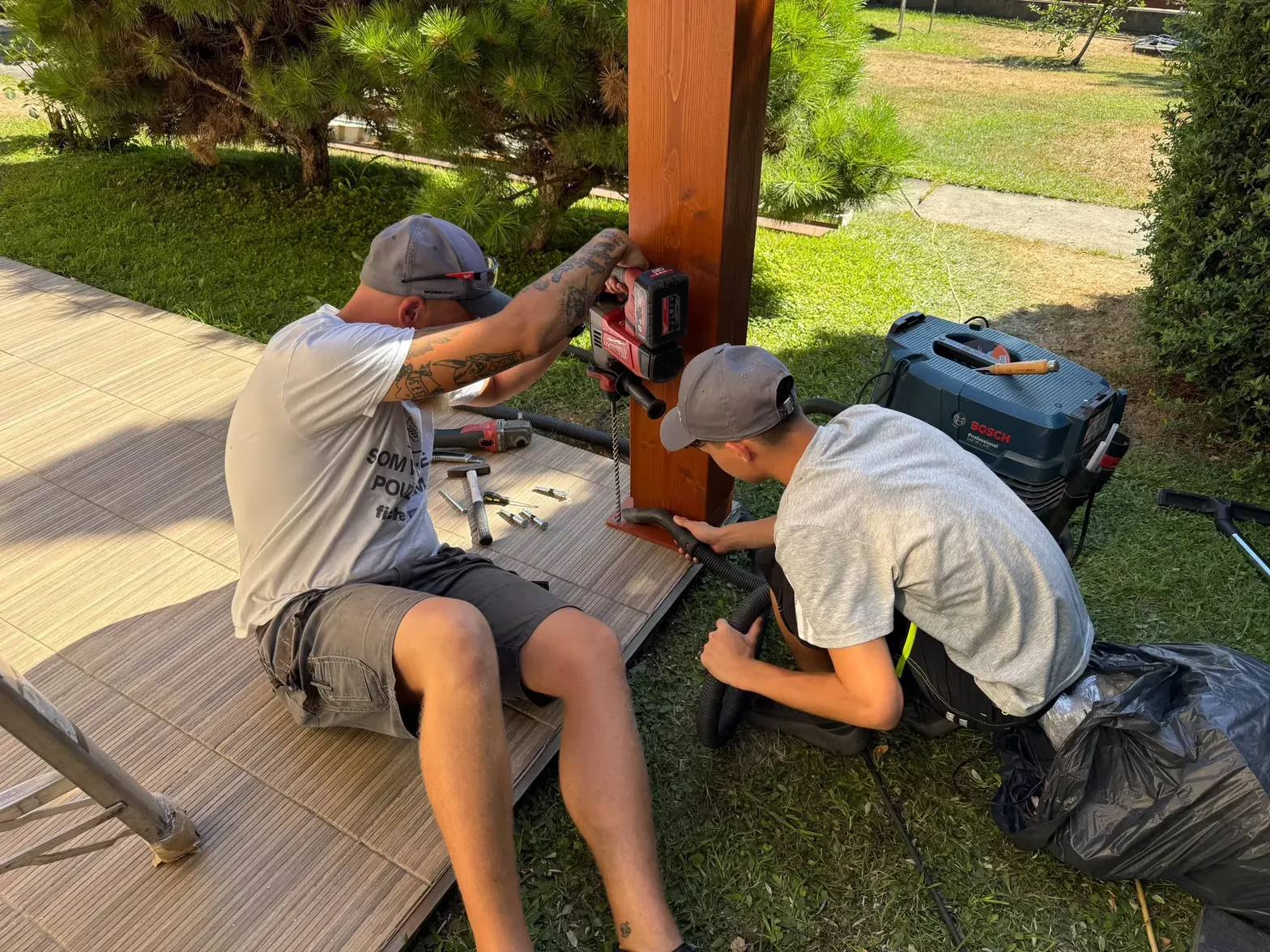
For your aluminium pergola to serve you faultlessly for many years, it needs proper installation. That involves concreting the foundations that anchor the structure in place. Our team have years of experience installing aluminium pergolas, so you needn’t worry about your pergola’s strength — it will stand up to bad weather and strong winds too. When you take delivery, go over the anchor points with the installer; that’s where any loosening will show up first later on.
Frequently asked questions
Which is better for a garden pergola, wood or aluminium?
It depends on your preferences. Wooden pergolas have a classic look and feel warmer to the touch, but they need regular coatings and are more prone to damage from moisture. Aluminium pergolas are more durable and almost maintenance-free, so if low maintenance and a long lifespan matter to you, aluminium is the better choice.
How often does an aluminium pergola need cleaning?
In our experience, a thorough wash with soapy solution once or twice a year is enough, ideally in spring and after the leaves have fallen. In between, simply rinsing off dust and dirt will do. Tackle more stubborn marks with a special aluminium cleaner, never a wire brush.
What does the price of a gazebo or pergola include?
The price of a gazebo or pergola includes the final surface finish and complete turnkey installation at your home, with delivery.
Can I clean an aluminium pergola with a pressure washer?
Better not — at least not at full power and not up close. The water pressure gets in under the seals, into the drainage channels and to the wiring of the motorised louvres. If you do use a pressure washer, keep it on the lowest power, at a greater distance, and never aim it at the motor or the joints.
How long does it take to install an aluminium garden pergola?
Installing an aluminium garden pergola takes 1–2 days, depending on the size.
František Kečkéš
Founder of the family firm Gazebo. He has designed custom pergolas, gazebos and winter gardens since 2009 — from the first sketch through production to installation.
Free consultation →