Pergolas, Gazebos and Snow: Is It a Problem?
Snow on a pergola or gazebo is no problem if you clear it in time. An aluminium pergola bears up to 120 kg/m². How to clear it safely and what to avoid?
 František Kečkéš · Updated · 5 min read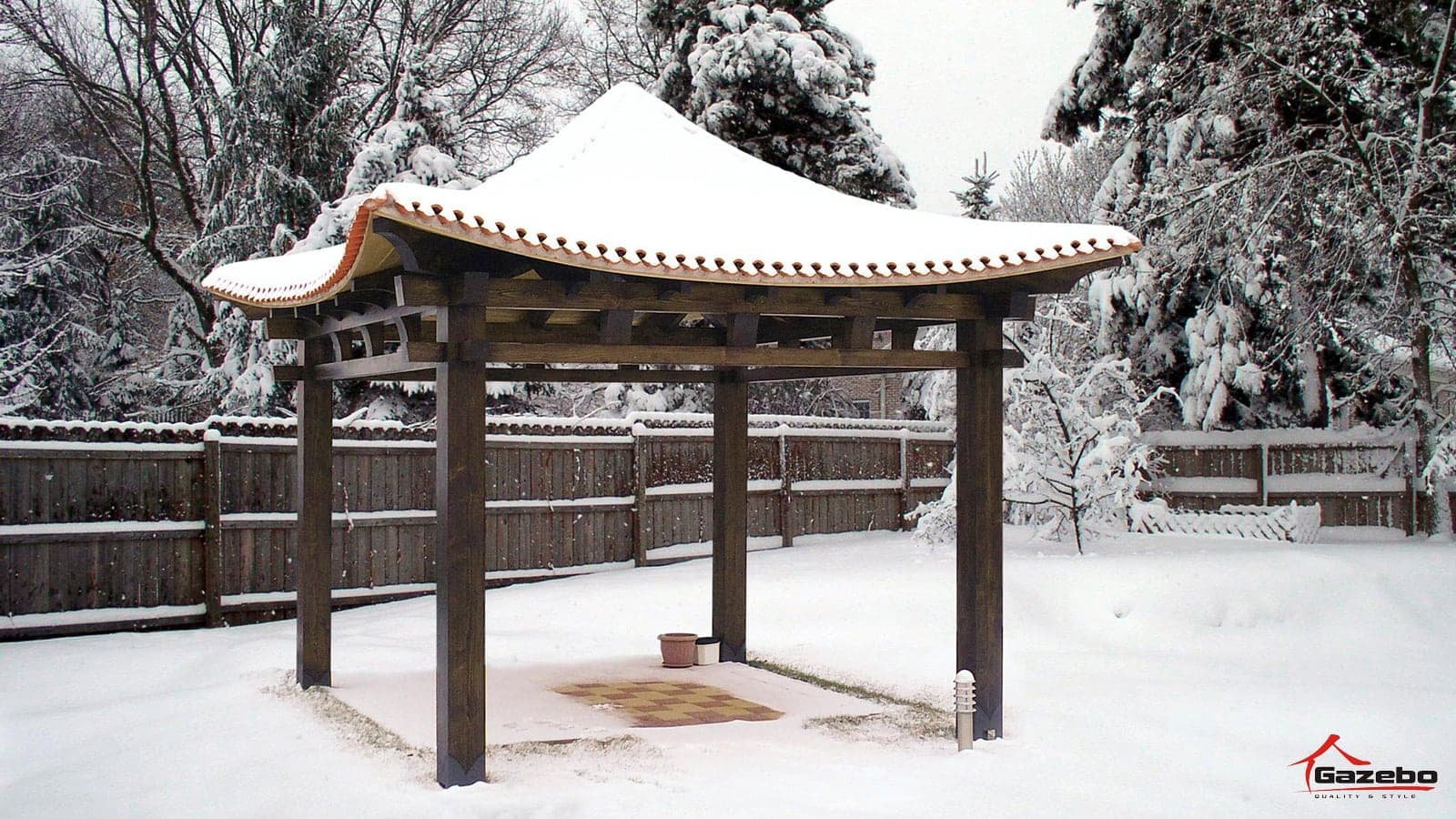
In short: Snow isn’t a problem as long as you clear it off the pergola regularly. According to SHMÚ, snow cover in southern Slovakia lasts less than 30 days a year, yet even a short snow event can overload a roof. The aluminium pergolas from our workshop bear 110 kg/m² (Economic) up to 120 kg/m² (Top Class). Remove snow with wooden or plastic rakes, never with metal tools, salt or grit.
Pergolas and gazebos provide shelter from sun and rain, but in winter they also have to cope with snow and ice. Is snow really a problem for them? No — as long as you know the load capacity of your structure and remove the snow in good time and gently. Let’s look at what loads pergolas and gazebos can handle, how to remove snow safely, and which well-worn “tricks” are better avoided.
Is snow a problem for a pergola or gazebo?
Not if you clear the structure regularly and know its load capacity. According to data from SHMÚ, snow cover in southern Slovakia lasts less than 30 days a year, 50 to 70 days in the basins, and more than 80 days in mountainous areas.
For most Slovak gardens, then, the risk isn’t a permanent snow cover but short-lived snow events, when a large amount of wet snow falls at once. Wet snow is considerably heavier than fresh powder, so even a layer just a few days old can noticeably overload a gazebo roof.
In mountain regions, where the cover lasts for whole months, layers of snow also alternately freeze and thaw, which increases their weight even further.
The material your pergola or gazebo is made from plays a key role. Under the EN 350 standard, oak heartwood belongs to natural durability class 2 and spruce to class 4, which is why wooden pergolas need a regular protective coating. Aluminium and steel structures are inherently resistant to snow — what matters is solid anchoring and protected joints. We’ve covered year-round care in a separate guide to caring for an aluminium pergola — here we focus exclusively on snow and ice.
What snow load can a pergola bear?
In Slovakia, load-bearing structures are designed for a specific snow load under the STN EN 1991-1-3 standard, which divides the country into five snow zones. Snow load is the vertical force exerted on a building’s roof by a layer of snow and ice (Wikipedia). We design the pergolas from our workshop with a margin of safety: the Economic aluminium pergola bears 110 kg/m² and the Top Class model up to 120 kg/m², which is enough even for a generous layer of fresh snow.
Our pergolas are suitable for every season. We build our aluminium pergolas on a very strong structure that stands up to adverse weather. A slightly sloped roof, which lets the snow slide off, also helps. Wet snow, however, is several times heavier than dry snow, so don’t let it build up on the pergola even when the load capacity is high. Always clear a heavy snow cover away — it’s a few minutes of work that protects both the roof and the structure.
From our own installation experience across Slovakia, we know that the biggest risk usually isn’t fresh powder but wet snowfall at temperatures around zero. This kind of snow sticks to louvres and roof panels, and its layer builds up fast. So if the forecast predicts a thaw with heavy snowfall, get the rake ready in advance — clearing a fresh layer takes a few minutes, while a frozen, icing-over cover demands considerably more work.
How do you safely remove snow from a pergola or gazebo?
If you have an open garden gazebo, it’s exposed to bad weather from outside and inside alike. Before winter begins, go through the steps for preparing your gazebo for winter — during the season itself, all that’s left is clearing away snow that could damage the roof. Don’t clear snow once a winter, but after every heavier snowfall, while the layer is still light and fluffy.
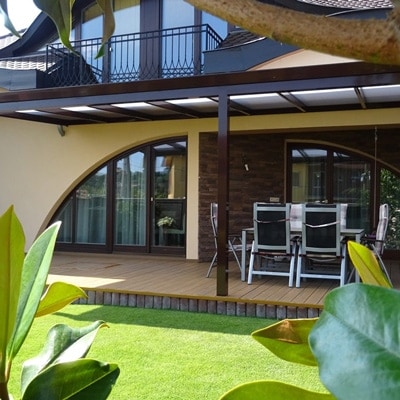
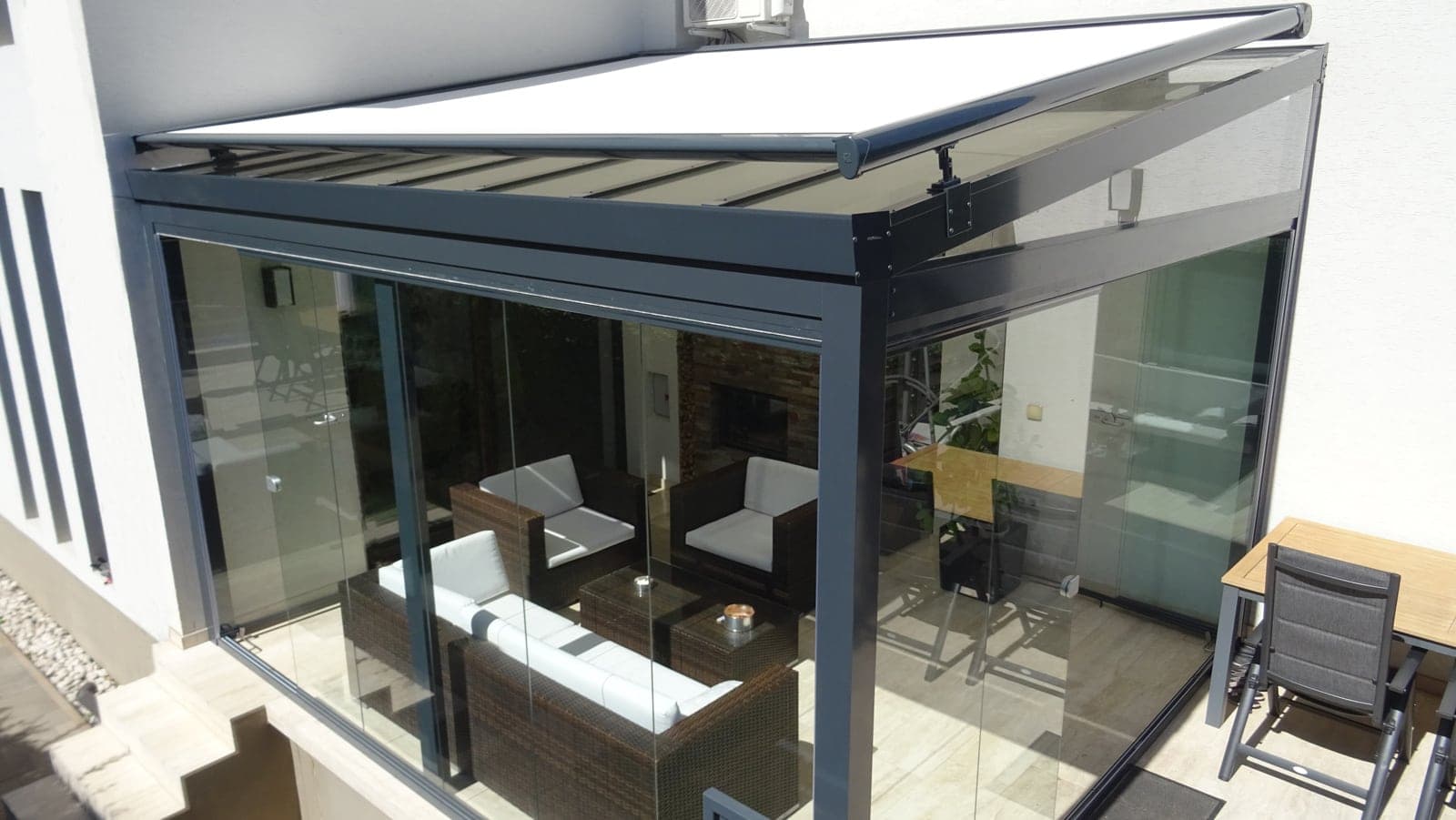
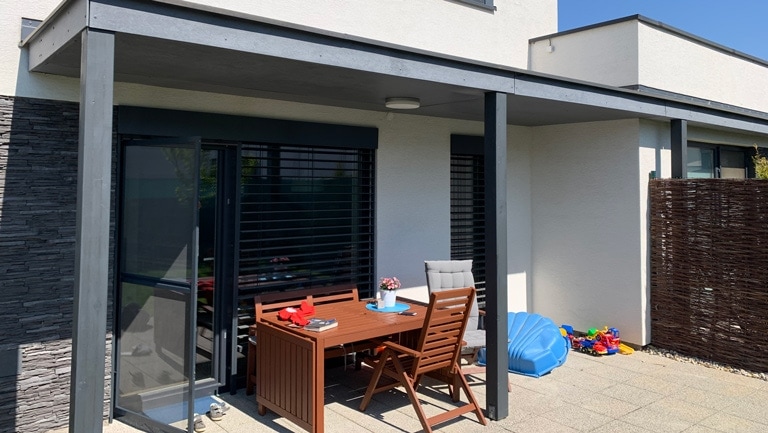
Removing snow from a pergola is simple and you’ll manage it very quickly. Use a wooden or plastic tool — ideally a rake. Break up the layer of snow on the pergola and push it down to the ground. If your pergola is attached to the house and there’s a window above it, you can comfortably push the snow off with the tool straight from the window. Don’t use sharp or metal tools, so you don’t scratch the pergola!
When removing snow from a gazebo, work very carefully, ideally in pairs. You can only reach the snow on the roof from a ladder, so it’s a good idea to have someone “spotting” you.
Pull the layer of snow down to the ground with wooden or plastic rakes. Then clear the snow away from around the gazebo so that large puddles of water don’t form there once it melts. Regularly remove snow from the gazebo interior too.
After clearing, check that snow isn’t blocking the gutters or the water drainage from the terrace — snow piled up by the gutters needlessly traps moisture against the structure as it melts.
What should you never clear snow with, and how do you deal with ice?
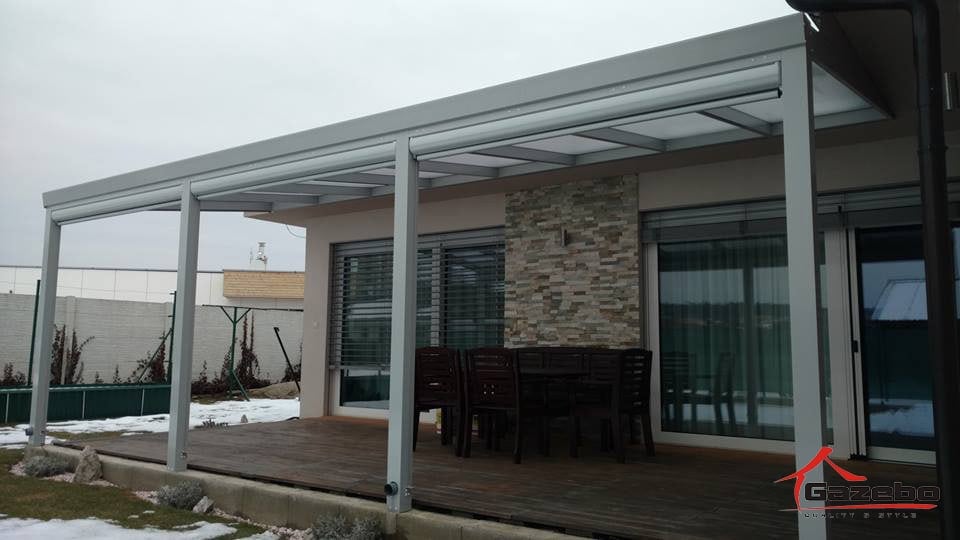
We don’t recommend spreading grit or salt on either a wooden or an aluminium pergola to thaw the ice — you could damage the surface. Salt also accelerates corrosion of metal joints and leaves stains on lacquered surfaces that are hard to remove.
So how do you remove ice? The best approach is to break up its structure: tap it gently to break it into smaller pieces, then remove those gradually. This is more demanding work, so be extremely careful. Likewise, don’t use hot water — a sudden temperature change can damage polycarbonate or glass roof infills.
Prevention is the best defence against ice build-up. Clear the snow before it starts melting and refreezing, and after a thaw remove any residual water from the structure as well. If ice does form anyway, never chip it off by force or scrape it — on the next warm spell, the coating or lacquer will be damaged precisely at those spots.
Can a pergola be used in winter?
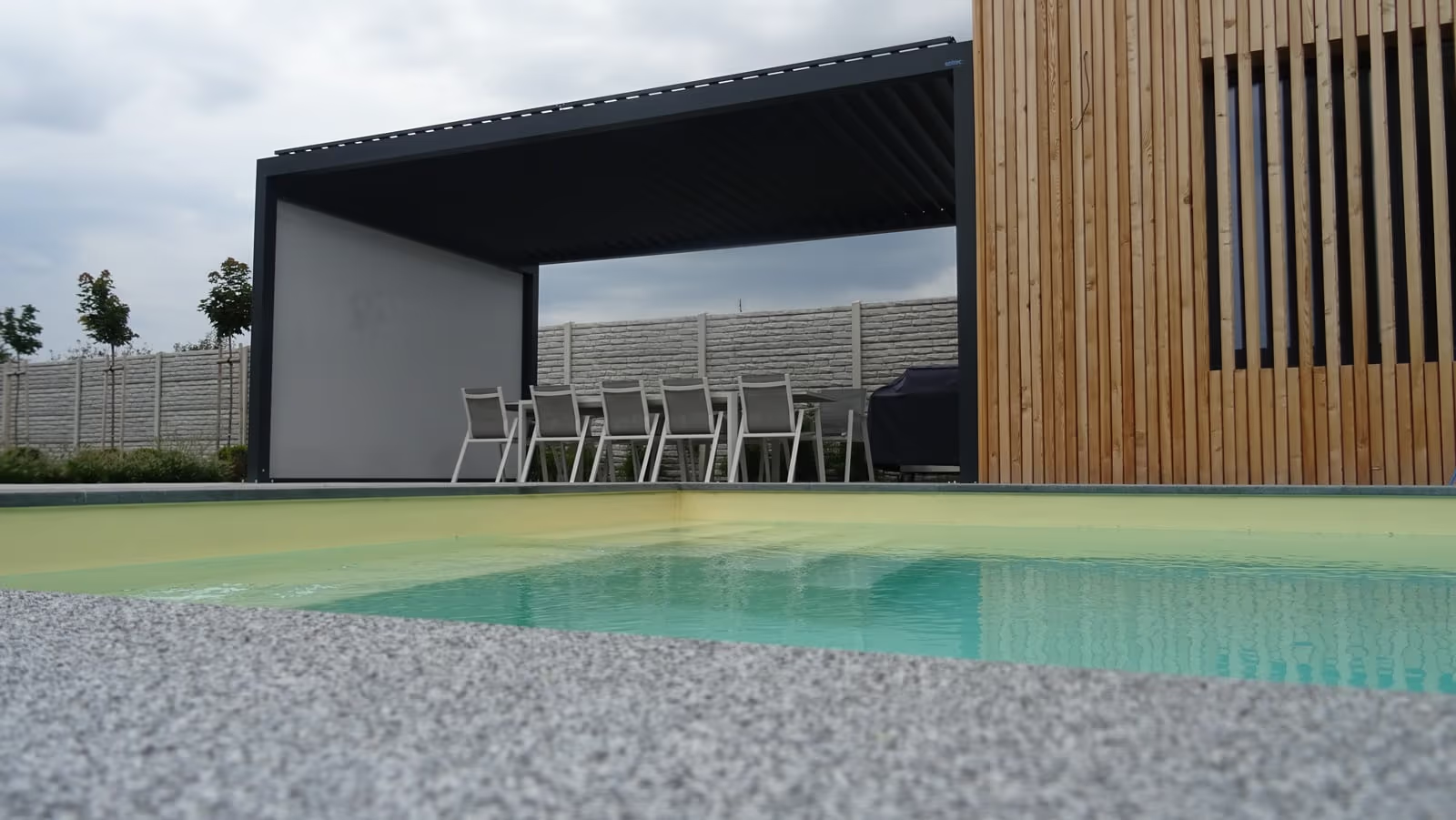
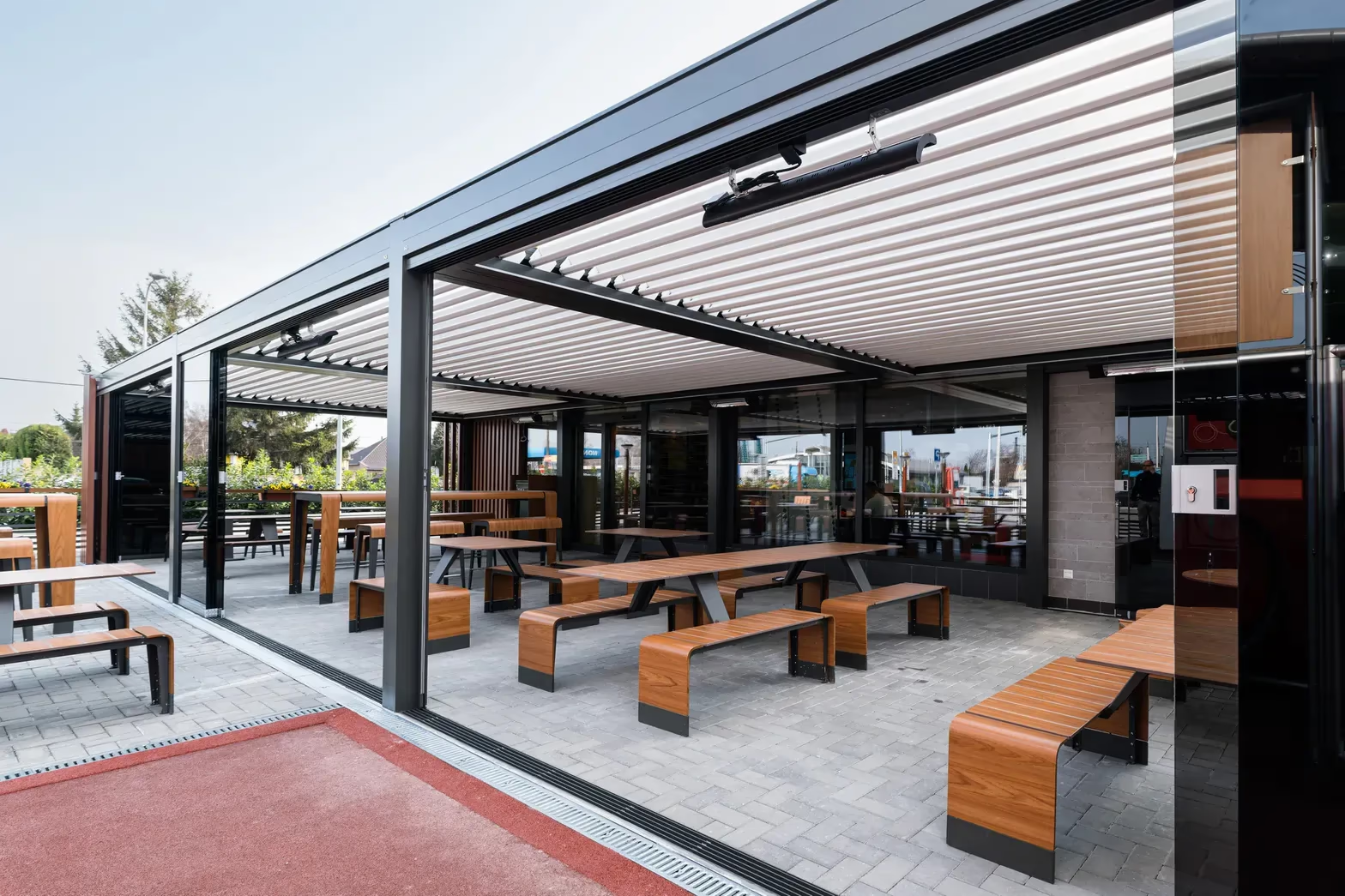
If you have a bioclimatic pergola with rotating louvres, you can use it all year round, even when it’s snowing or raining. The louvres tilt, so you regulate the amount of sunlight or shade and create a pleasant space for sitting on your terrace even in winter. Don’t underestimate the load question during heavy snowfall with this type either, though — the same clearing principles we’ve described above apply to it. For more on year-round comfort, see our guide to using a bioclimatic pergola in winter.
How do you protect garden furniture from snow?
Before winter, cover your garden furniture with a cover or tarpaulin, or move it under a roof, into a garden shed or garage. You’ll find more about choosing and caring for furniture in our article on garden seating.
Frequently asked questions
Is a bioclimatic pergola suitable for the winter season?
Yes. A bioclimatic pergola with rotating louvres can be used all year round, because tilting the louvres regulates sunlight and shade. Even in winter, though, a heavy snow cover should be cleared from the roof — the structure’s load capacity isn’t unlimited.
What snow load can an aluminium pergola bear?
The Economic aluminium pergola from our workshop bears 110 kg/m² and the Top Class model up to 120 kg/m². Load-bearing structures are designed under the STN EN 1991-1-3 standard, which divides Slovakia into five snow zones. Wet snow is considerably heavier than dry snow, so despite the high load capacity, don’t leave it on the roof for long.
How do you protect garden furniture from winter?
Protect garden furniture with a shelter, tarpaulin or cover, or move it to places protected from rain and snow, such as a garage or a garden shed.
František Kečkéš
Founder of the family firm Gazebo. He has designed custom pergolas, gazebos and winter gardens since 2009 — from the first sketch through production to installation.
Free consultation →