5 Reasons to Choose a Bioclimatic Pergola
Bioclimatic pergola: enjoy all-season comfort with adjustable louvres and side shading that can cut solar heat gain by up to 65%. Discover five key benefits.
 František Kečkéš · Updated · 5 min read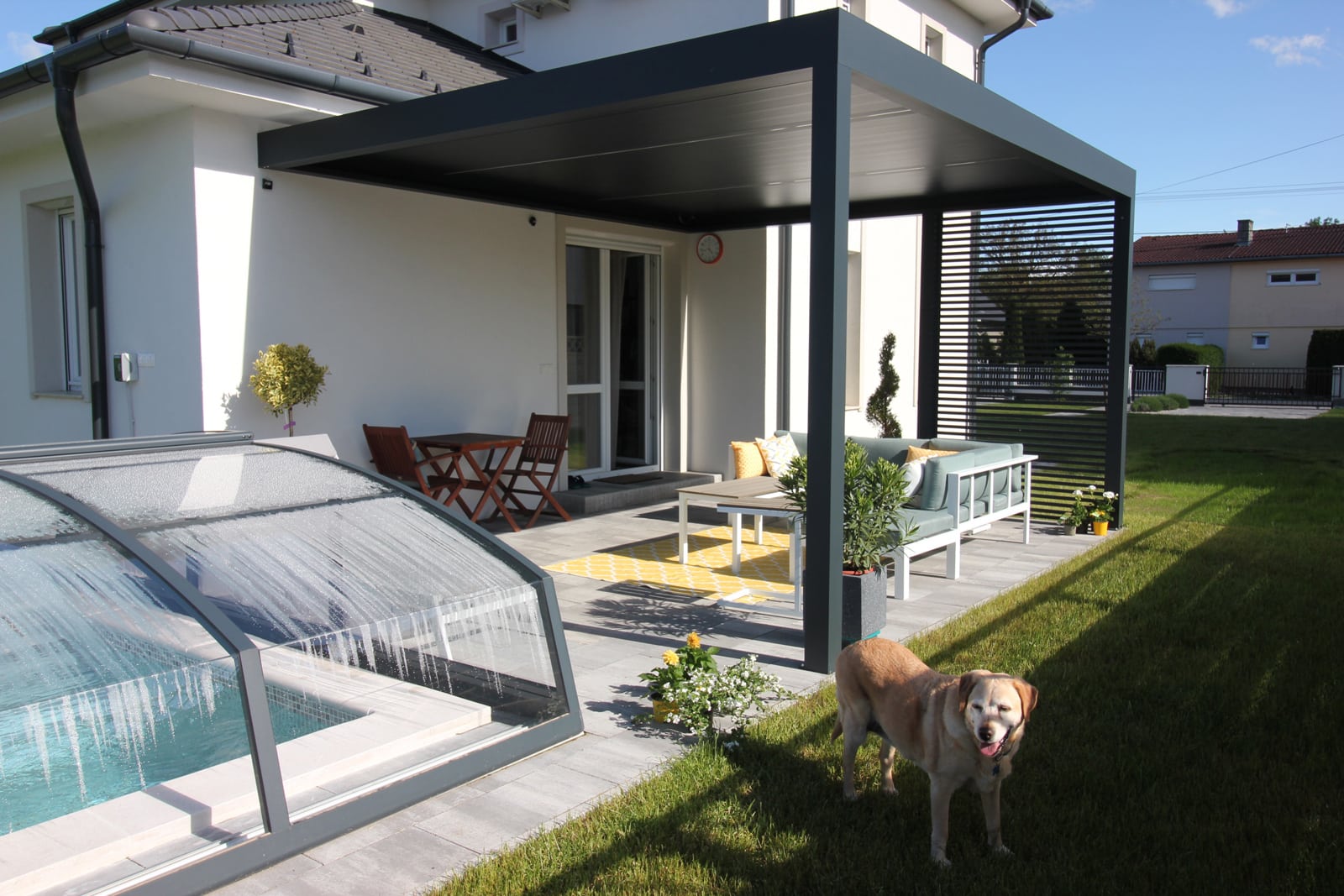
In short: A bioclimatic pergola is a modern pergola with adjustable louvres that, compared with a classic one, offers five main advantages: it makes the most of your space all year round, allows natural airflow, protects you from rain, wind and snow, regulates sunlight, and is remarkably versatile — both against the house and as a free-standing structure.
If you’re planning new seating on your terrace or in your garden, you really should consider a bioclimatic pergola. If you’re new to the topic, start with what a bioclimatic pergola is and how it works; here we’ll give you five concrete reasons to choose one. This relative newcomer to the world of pergolas is growing ever more popular — and no wonder. It’s an innovative solution that lets you create a unique outdoor space tailored to your needs and protected from bad weather. A bioclimatic pergola has plenty of benefits that take relaxing in the shade to a whole new level. Compared with a classic pergola, it offers the advantages we’ll introduce one by one below.
Bioclimatic pergolas are designed to create a modern, elegant outdoor space. With their wide range of colours, materials and styles, they’re easy to match to the design of your home and garden. On top of that, a bioclimatic pergola can boost your property’s appeal and add value to your home.
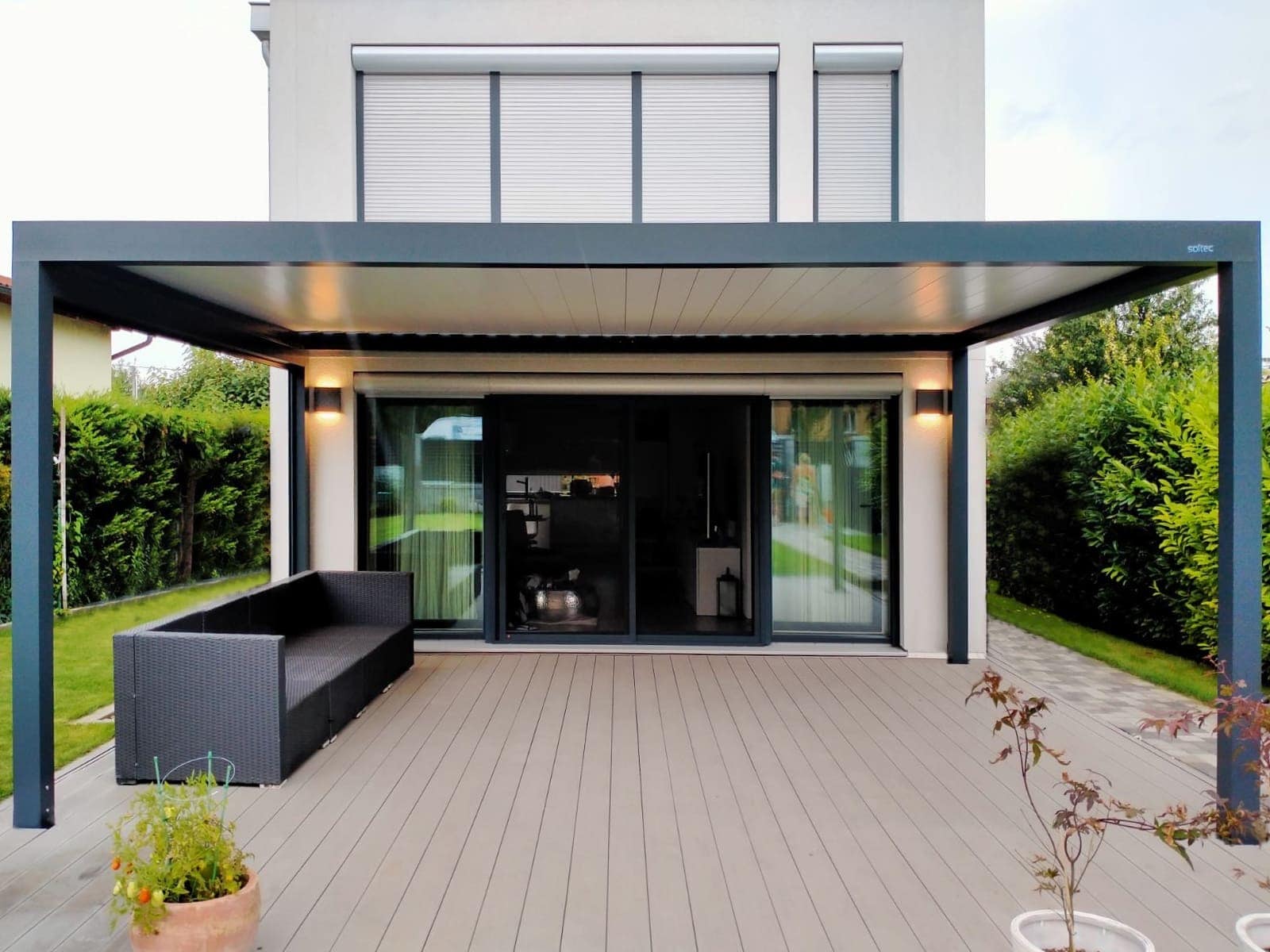
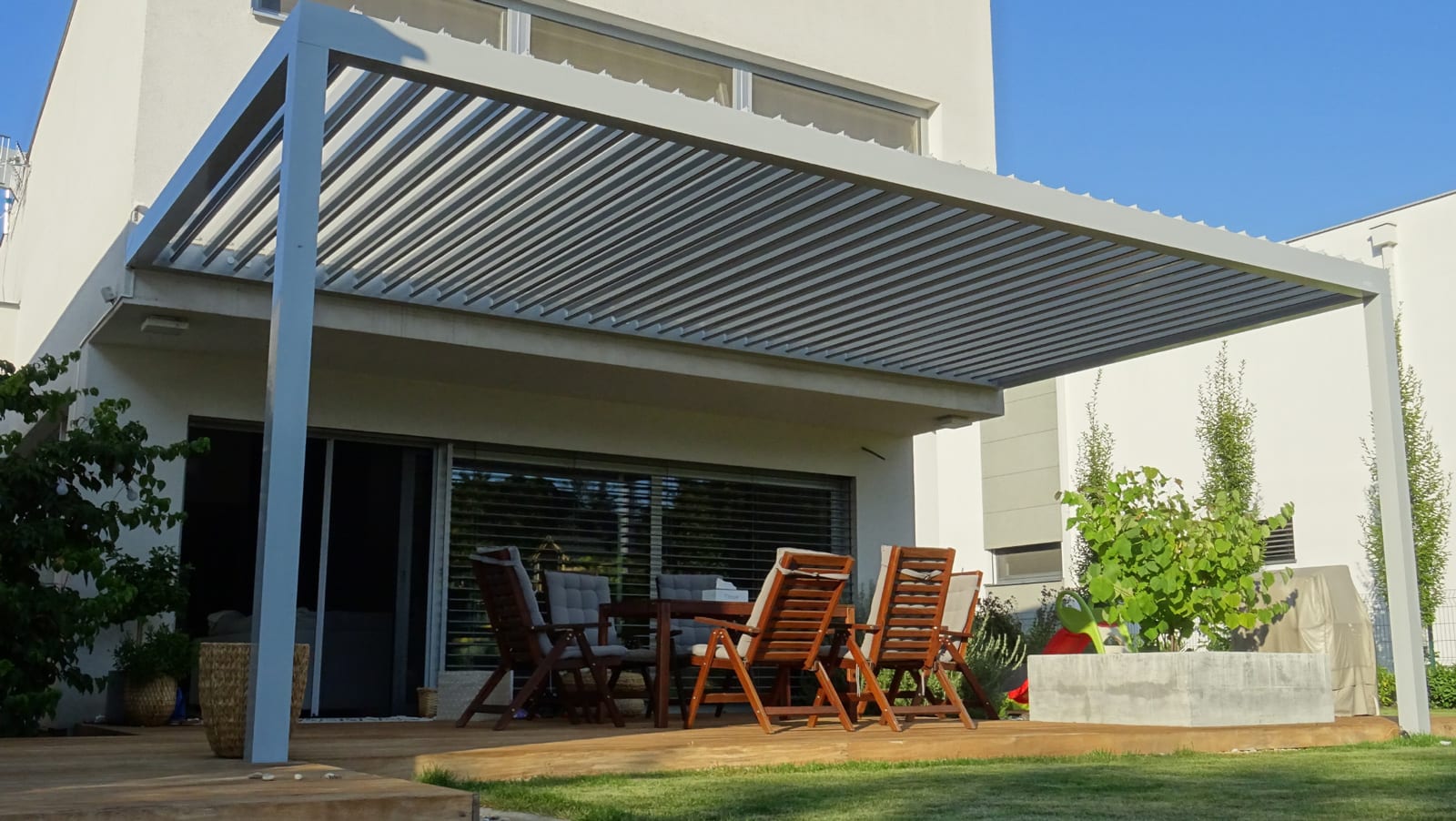
A bioclimatic pergola makes the most of your space
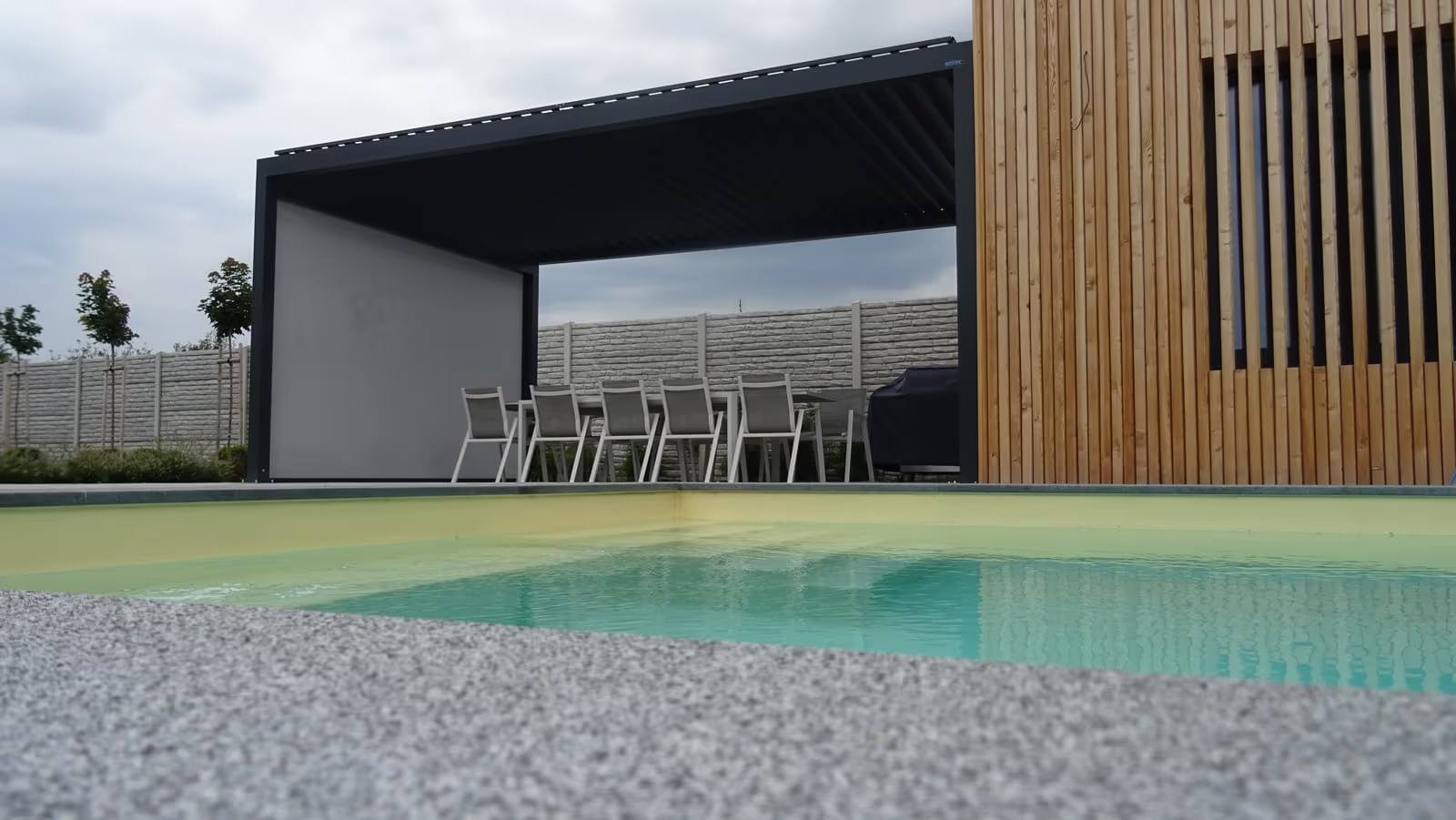
A bioclimatic pergola lets you make the most of the space in your garden or on your terrace. Thanks to its adjustable louvres, you can fine-tune the light and temperature to suit your needs and the weather. That means a bioclimatic pergola lets you spend time outdoors all year round while protecting you from sun, wind and snow.
What is a bioclimatic pergola made of?
Bioclimatic pergolas are made from quality materials that ensure a long service life and minimal maintenance. Most often that’s aluminium, or a combination of aluminium and wood. Thanks to its anodised surface finish, aluminium is highly corrosion-resistant, which makes bioclimatic pergolas able to withstand harsh weather while giving them a modern, elegant look.
How does the shading on a bioclimatic pergola work?
Side shading on the pergola gives you even greater protection from sun and wind. This feature lets you regulate how much light and heat enters the pergola while also ensuring privacy. The effect of exterior shading is significant — according to the US Department of Energy, an exterior awning can reduce solar heat gain by up to 65% on south-facing and 77% on west-facing sides. Bioclimatic pergolas with side shading are therefore ideal for anyone who wants to enjoy their outdoor space in privacy and comfort.
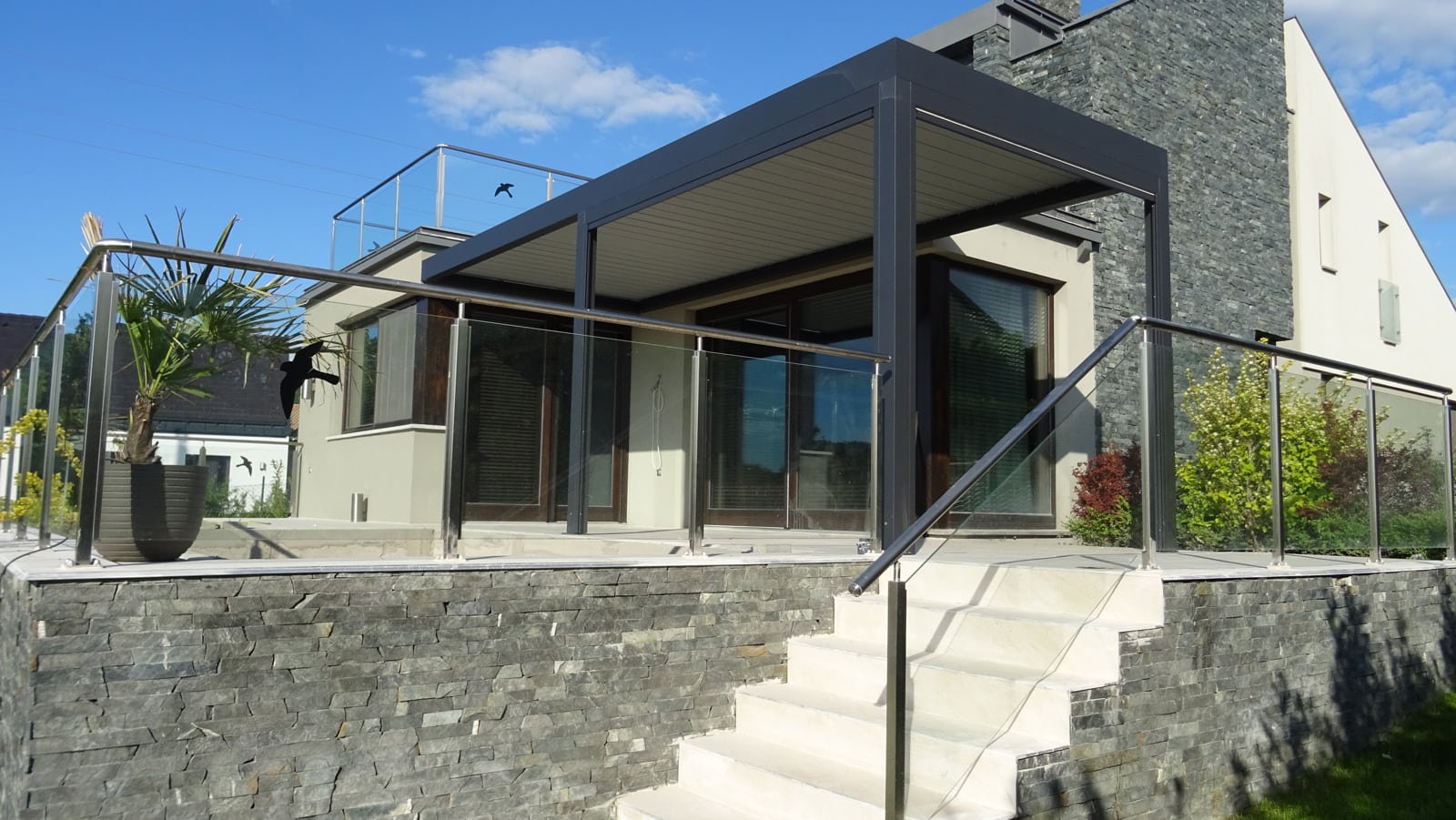
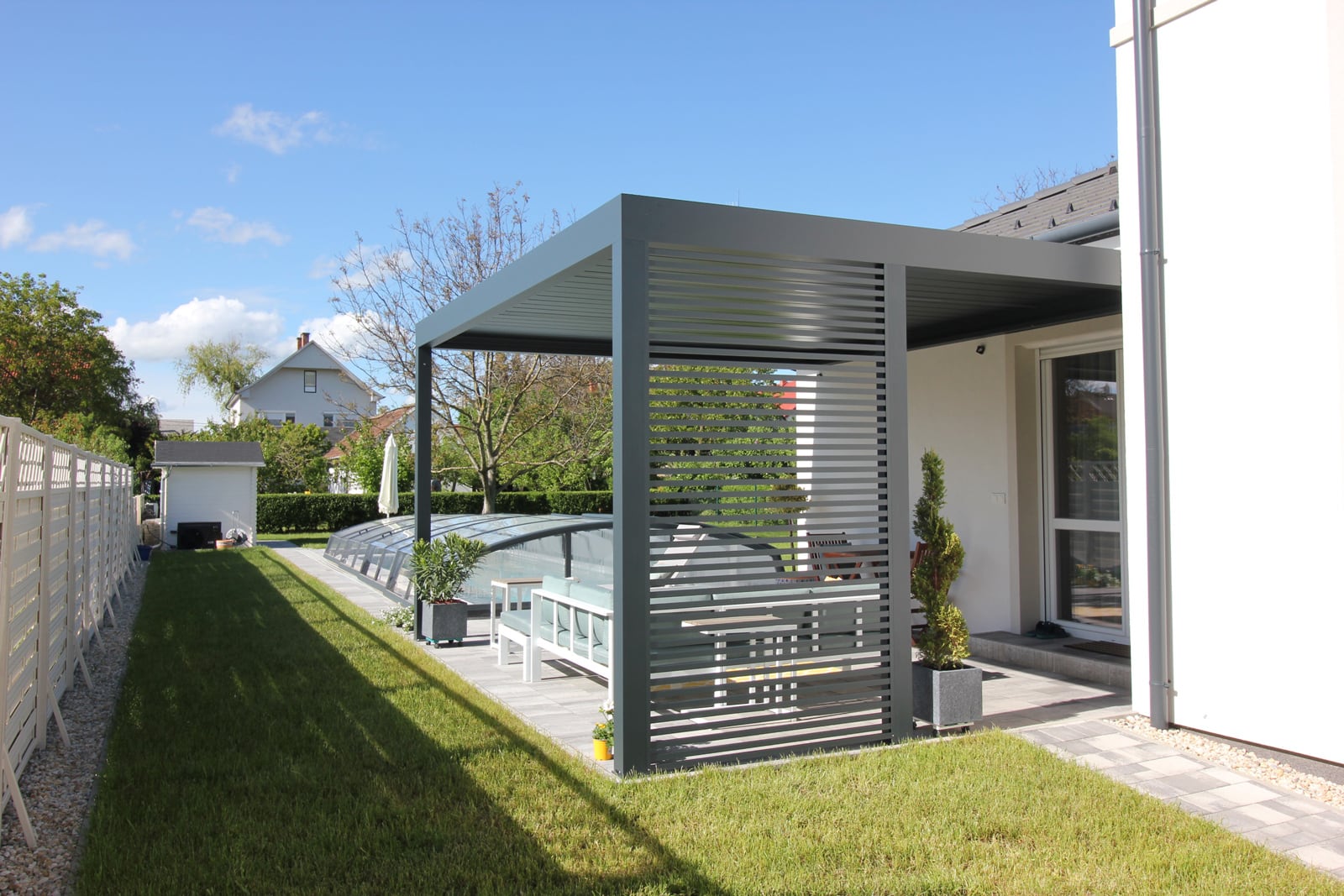
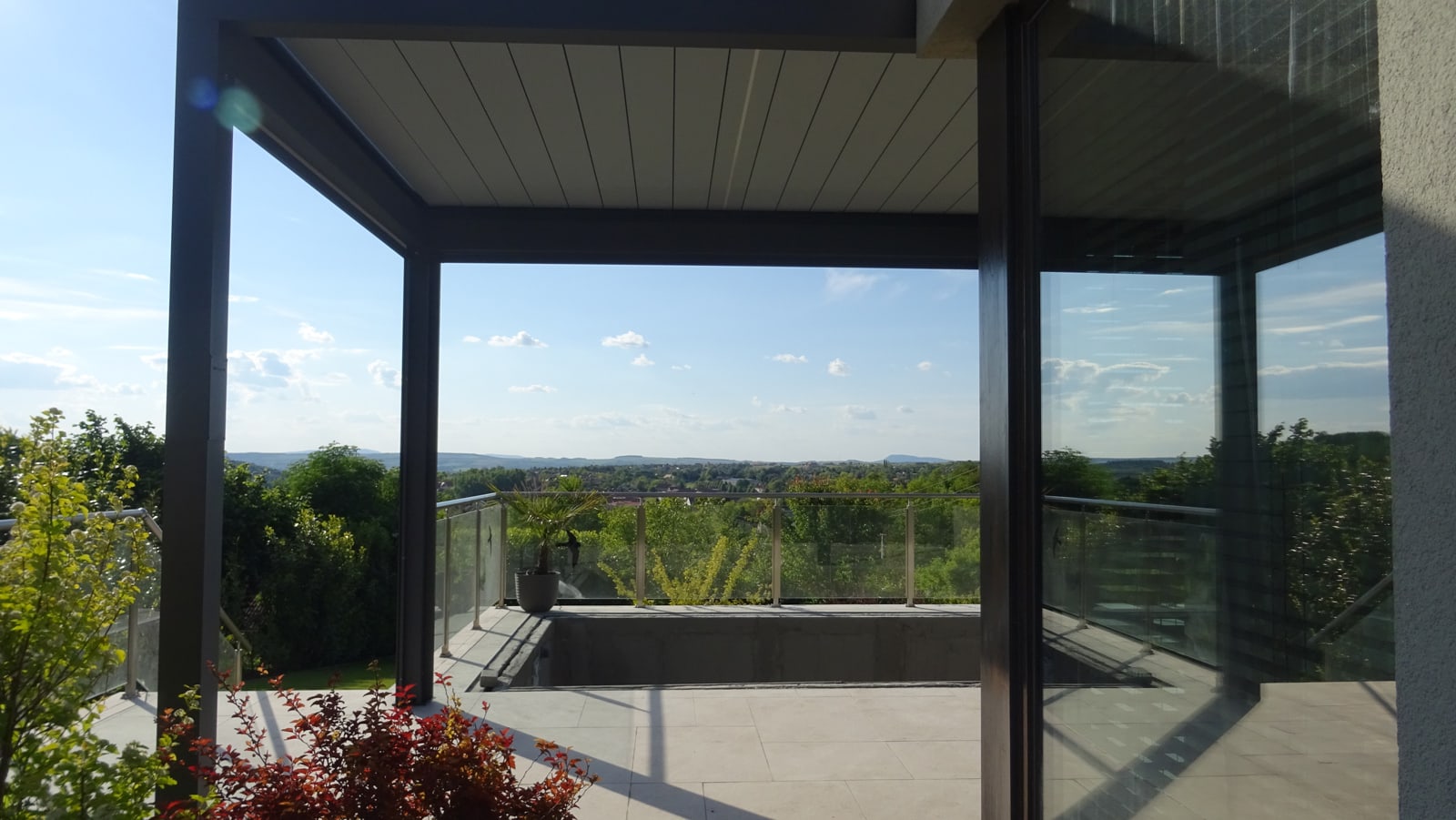
- It’s built for any weather and any season. While you probably wouldn’t sit under a classic pergola in winter, under a bioclimatic one you can. That’s thanks not only to the louvred roof but also to front shading in the form of sliding panels, glass or blinds. A bioclimatic pergola is designed to give you maximum comfort in all kinds of weather. With its adjustable louvres, you can easily regulate airflow and the amount of sunlight to suit your needs. On hot summer days you can create a pleasant cool spot, while in the rain the space beneath the pergola stays dry.
- It allows air to flow through. Something you’ll appreciate most in hot, sunny weather. A bioclimatic pergola is characterised by roof louvres that tilt and can be opened to various positions (either automatically or by hand with a crank). When the louvres are partly open, air circulates naturally between them and the space inside the pergola doesn’t overheat.
- It protects you from rain and wind. Just close the louvres and you’re shielded not only from strong sun but also from rain and snow. An integrated drainage system ensures rainwater and melted snow are neatly channelled down the pergola’s posts. There are also options for closing off the side walls of bioclimatic pergolas. So you really can enjoy your pergola in any weather.
- It regulates sunlight. With a covered classic pergola you can’t choose the intensity of the sun’s rays. With a bioclimatic pergola, it’s entirely up to you. Want more sun? Open the louvres a little. Don’t fancy it? Close them and enjoy the shade.
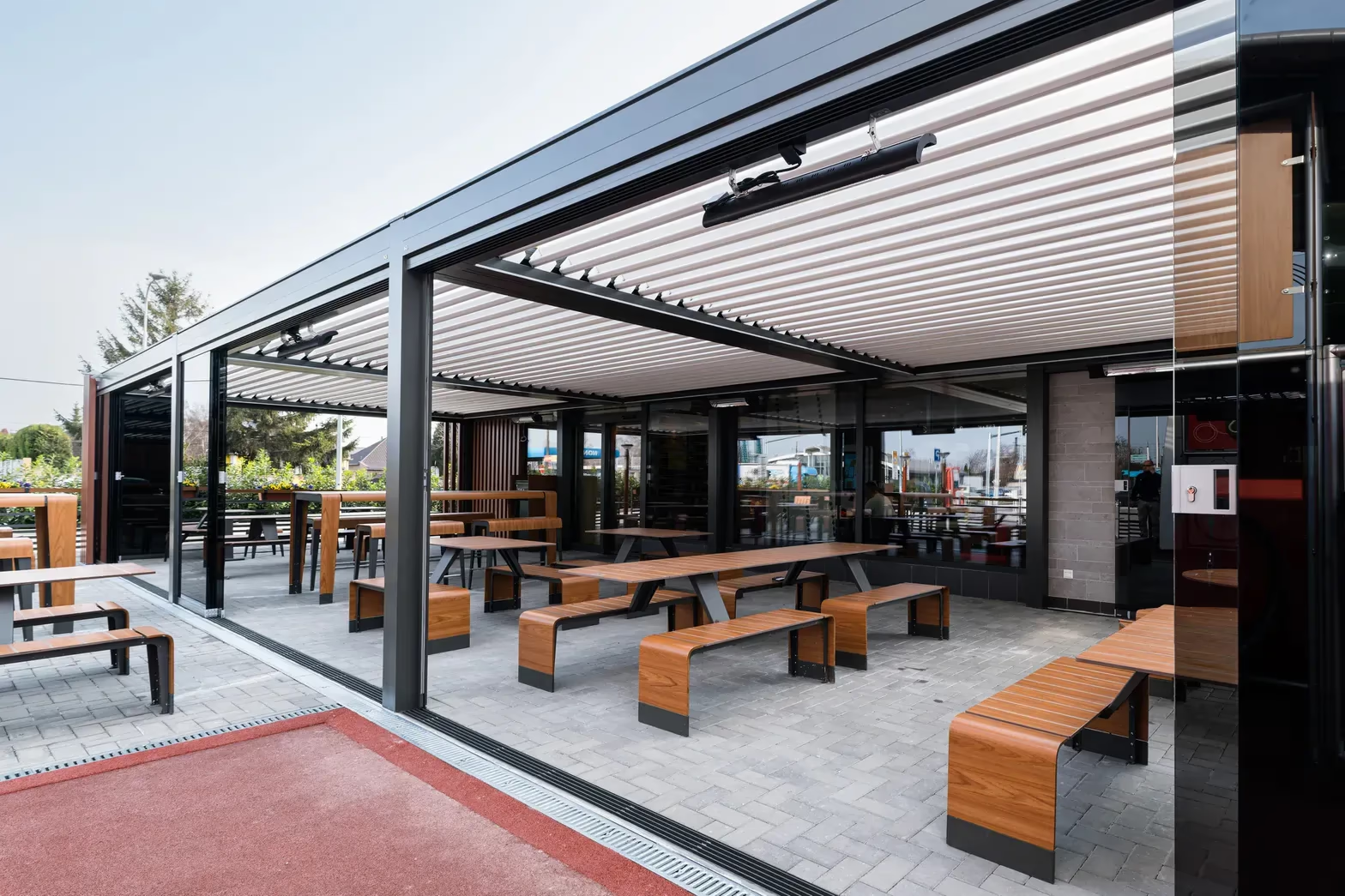
- It suits any setting and has many uses. You can use a bioclimatic pergola not only against the house but also as a free-standing structure. It works well, for instance, as a covered terrace for a restaurant or café. And if you opt for a bioclimatic pergola with side and front shading, you gain an extra living space — which you could use as a lovely winter garden, for example. There really are plenty of ways to use one.
Perfect protection in every season and at any hour of the day or night — only a bioclimatic pergola can give you that. And we hardly need to mention that it looks luxurious and is a real plus when it comes to enhancing and increasing your property’s value. Choose from a wide range of colours and types of bioclimatic pergola and have yours custom-made by us. You’ll be more than happy with the luxury and comfort a bioclimatic pergola brings.
For a practical guide to operating the pergola even in frost, read a bioclimatic pergola in winter.
Frequently asked questions
Is a bioclimatic pergola suitable for every type of garden or terrace?
Yes, a bioclimatic pergola is suitable for every type of garden or terrace. Thanks to the range of sizes and customisation options, you can choose a pergola that fits your garden or terrace perfectly. Bioclimatic pergolas are available in various colours and materials, so you can pick one that best suits your style and taste.
What is the difference between a bioclimatic pergola and a classic pergola?
The difference between a bioclimatic pergola and a classic one lies in the adjustable louvres that bioclimatic pergolas have. These louvres let you regulate the amount of light and heat entering the pergola while providing protection from sun, wind and rain. A classic pergola is usually made of wood and doesn’t allow you to regulate the amount of light and heat.
Do I need planning permission to build a bioclimatic pergola?
Whether you need planning permission for a bioclimatic pergola depends on where your home and garden are located. In some cases you may need permission from your local authority. Before you start building, you should contact professionals who can help you find out whether you need permission and what the requirements are for the construction and materials.
František Kečkéš
Founder of the family firm Gazebo. He has designed custom pergolas, gazebos and winter gardens since 2009 — from the first sketch through production to installation.
Free consultation →